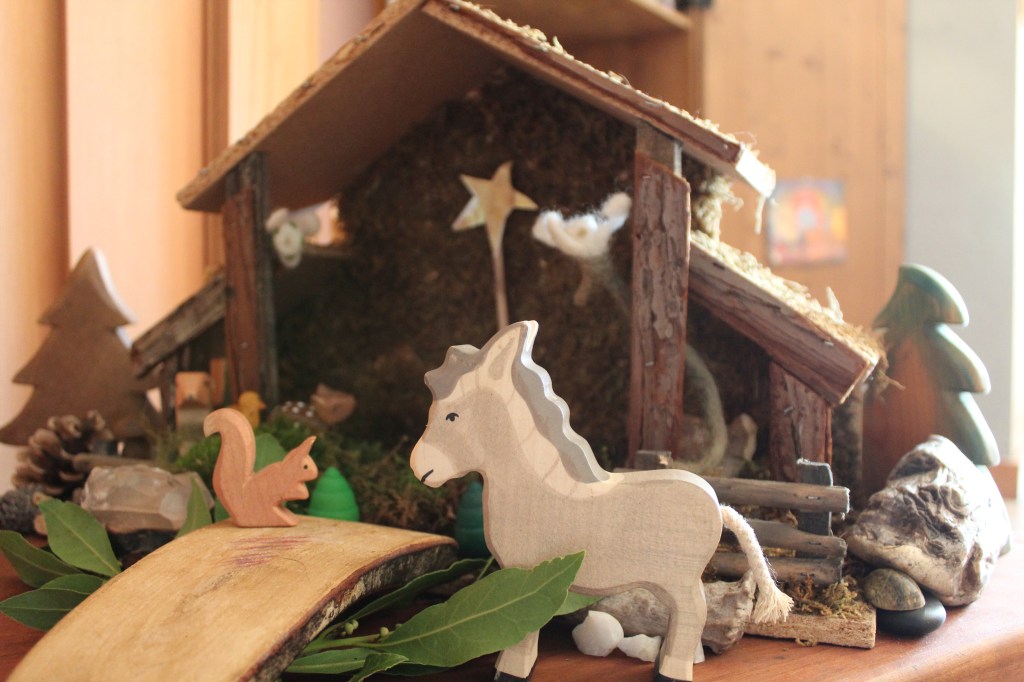
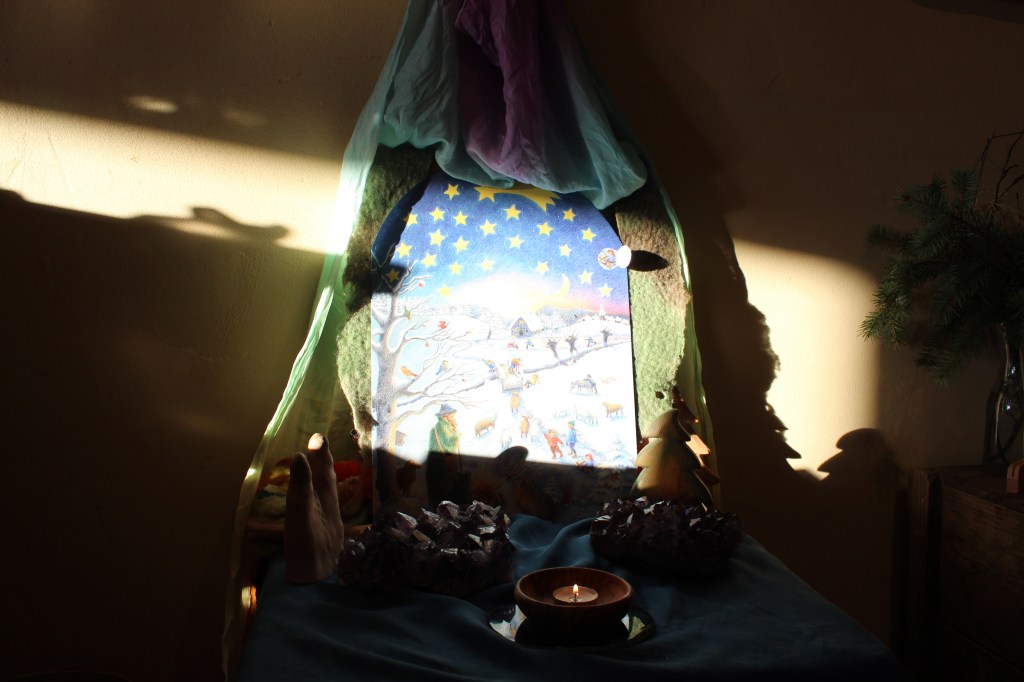
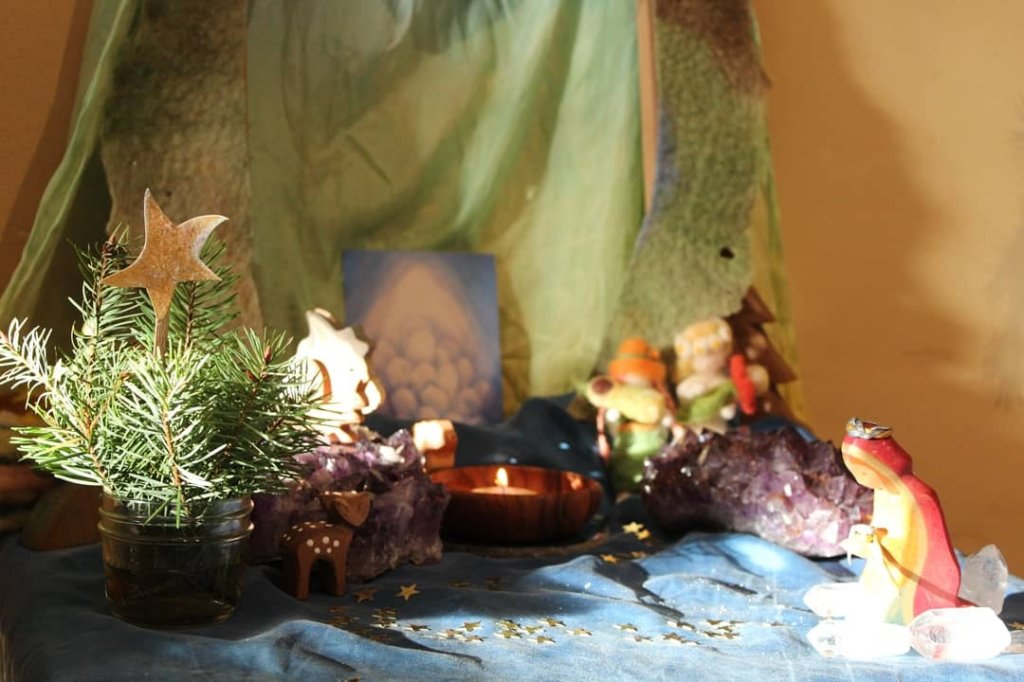
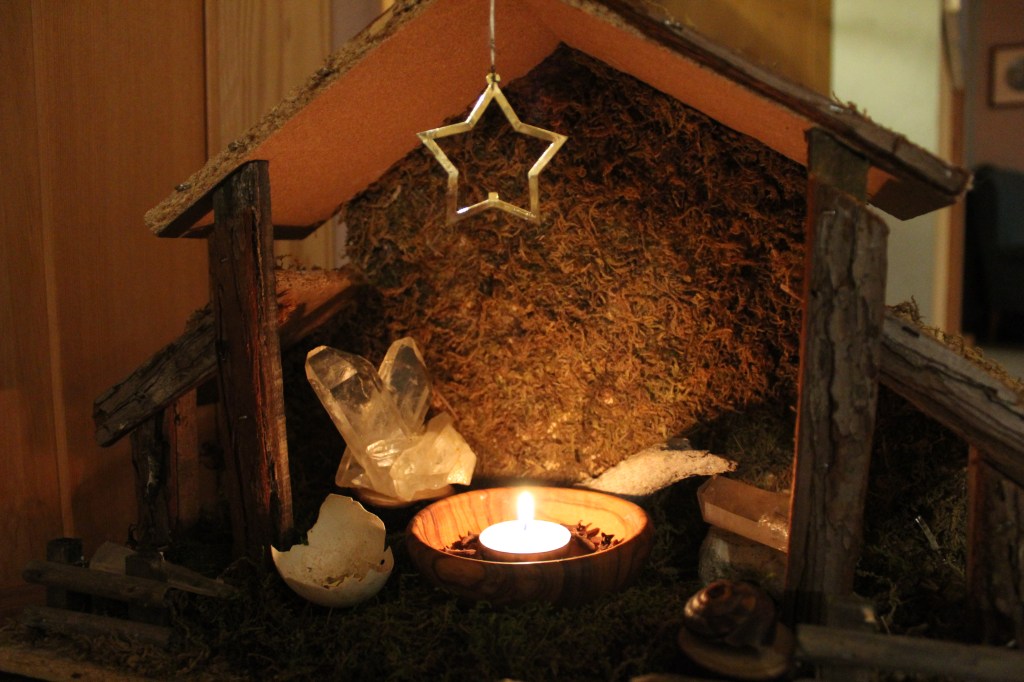
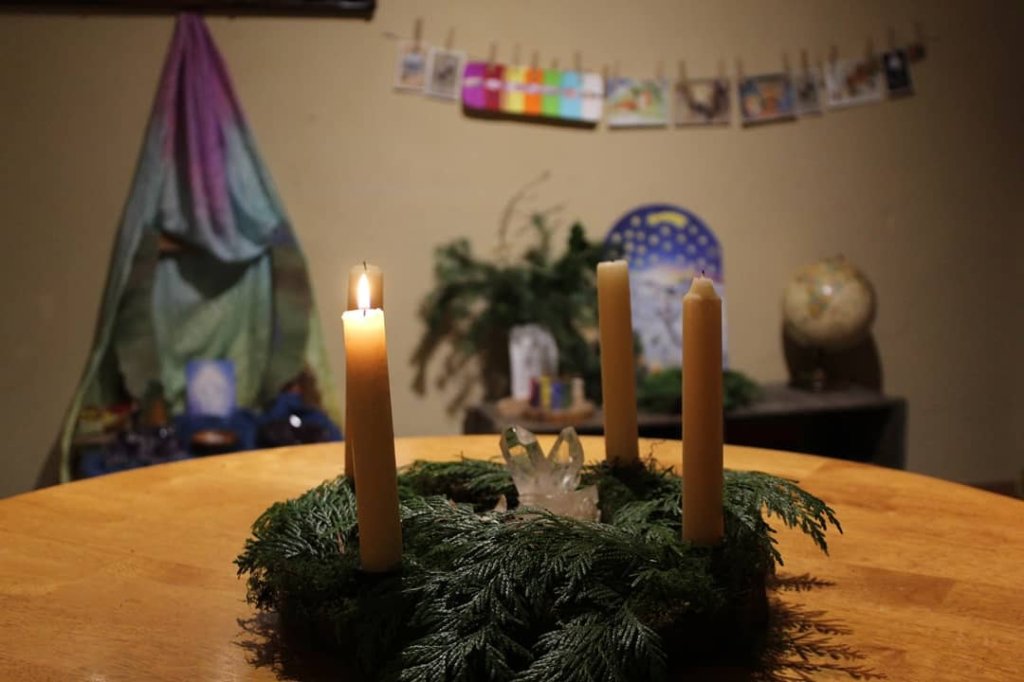
Today the children woke up to a few special changes around the house signifying the beginning of Advent. We had an early morning tea party as the mist over the mountains was chased away by the dawn. We began our Advent garden, by gathering and placing treasures from the mineral kingdom into a little creche covered in moss. We went for a forest walk to collect pine boughs, made our Advent wreath and began a new tradition by reading the first chapter of “The Yule Tomte and the Little Rabbits” by Ulf Stark, a lovely book that we will read from everyday until Christmas.
In our family traditions Advent and Christmas are about celebrating the light in the darkness. The imagery in Waldorf pedagogy does this beautifully building week by week a connection between the celestial light of the cosmos and human experience on earth. Each week is a time to engage with the 4 kingdoms, of minerals, plants, animals, humans and notice what they bring to the earth, and through that foster gratitude for their unique gifts.By working from a place of stories, music, and crafts in connection with nature, Christmas can take on meaning past commercialism, which is inclusive to those who are religious or not. I love to think of the ancient Celtic celebration of mid-winter and see how those traditions became intertwined with the later Christian holiday. In that way the coming of the Child of Light is connected to the midwinter Solstice (or summer Solstice in the southern hemisphere), creating a narrative that highlights the magic of nature and our place as humans within that magic.
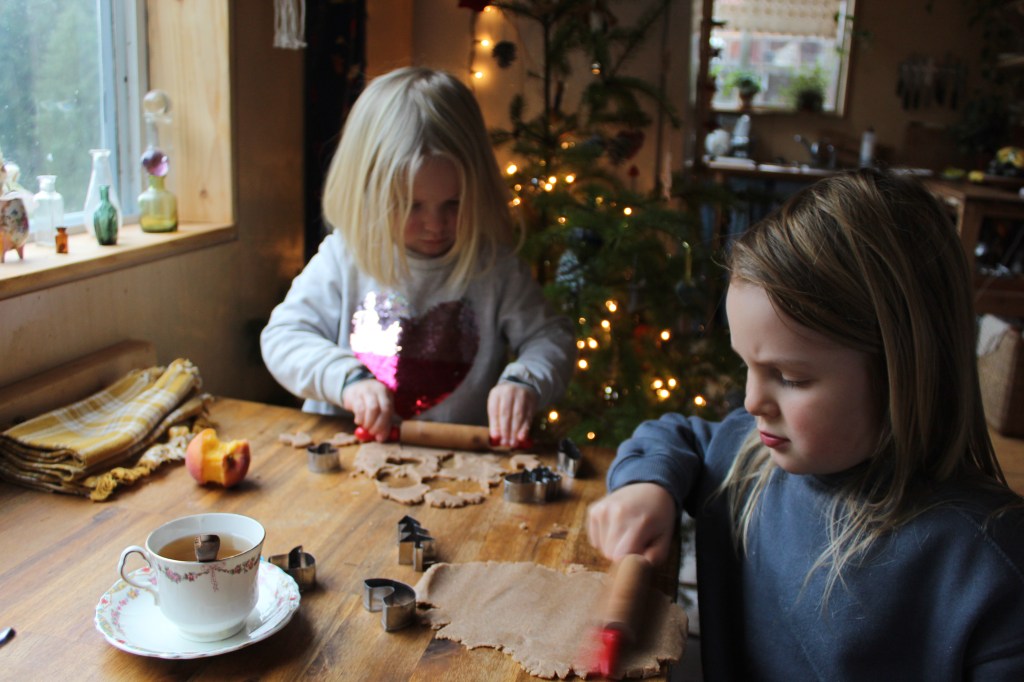
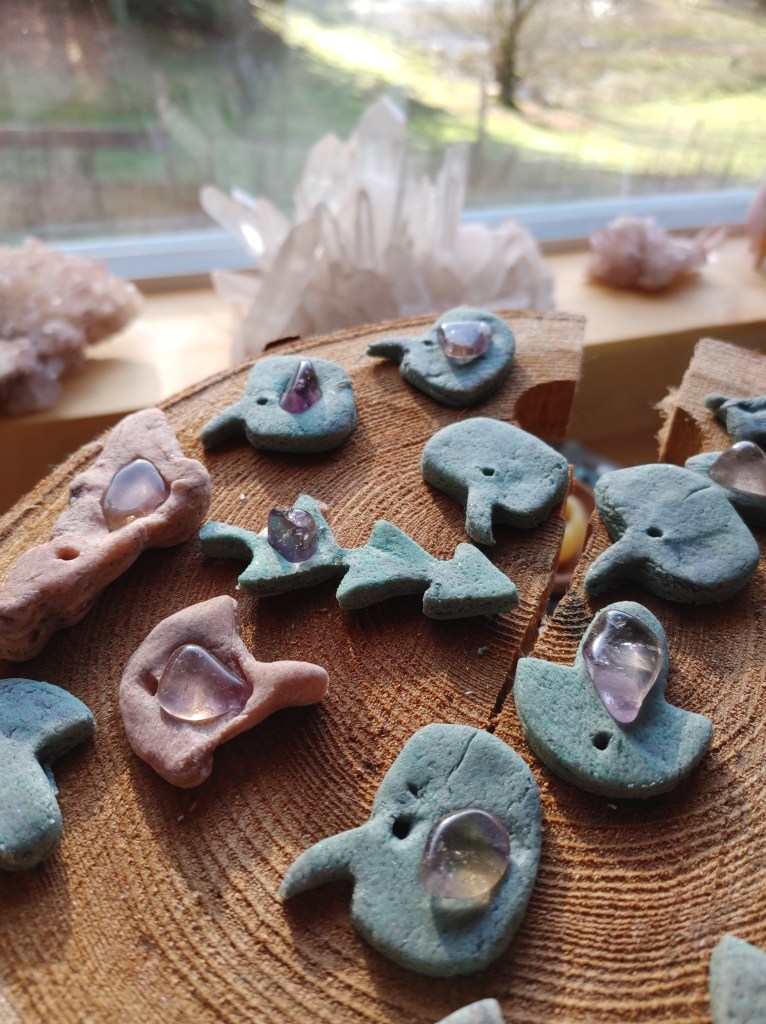
We will also be working with my favorite material, mica powder, to make salt dough ornaments. Check out this link for full instructions into this lovely craft https://wildwattlefolk.com/
November is here, which on Vancouver Island means misty mornings, gold and brown leaves falling, and rainy nights quickly growing longer, inspiring us to kindle our inner light as the light in the outer world fades. This brings with it a special feeling of expectation as the season turns to winter. This is our second Autumn back home in Canada, and now that we have experienced a complete turn of the year, I find myself settling into the joyful rhythm of the seasons as expressed in nature, and deepened through seasonal celebrations and our homeschool curriculum.
The rhythm of the natural world becomes embodied in our daily life through activities that connect us to our unique place in the world. With any big life change, there can be a sense of displacement and when we arrived back in Canada, I looked for a way to connect to the land and community here. We went on daily walks around the farm and surrounding forests, we began to notice what plants were flowering and what fruit was ripe. We harvested and gathered. We brought nature inside through cooking, crafting, stories and seasonal celebrations. We met friends along the way. We made connections and began to feel at home. Through this process, I realized that belonging comes from honouring the uniqueness of place and finding a way to relate to it. Our activities have helped to root us here, to make sense of this land.
After a full year of home learning with my Waldorf-inspired curriculum, we begin to anticipate favorite stories and crafts in connection to the season. This week we celebrate our inner light through lantern making, a lantern walk with family, and a special story.
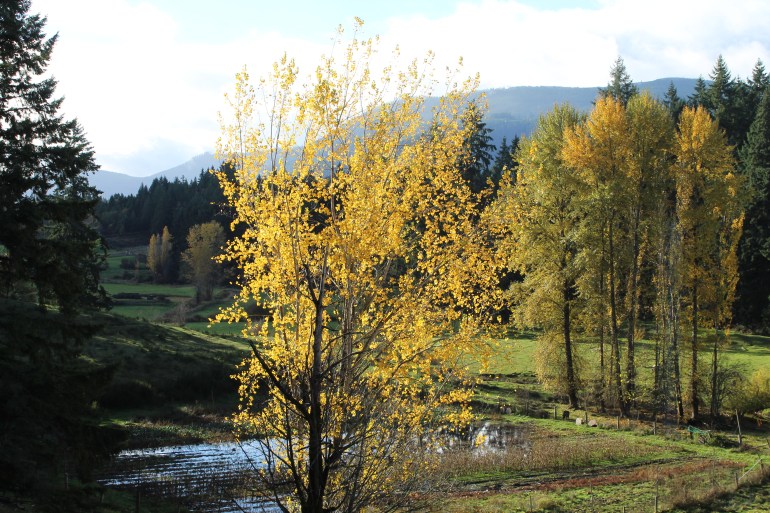
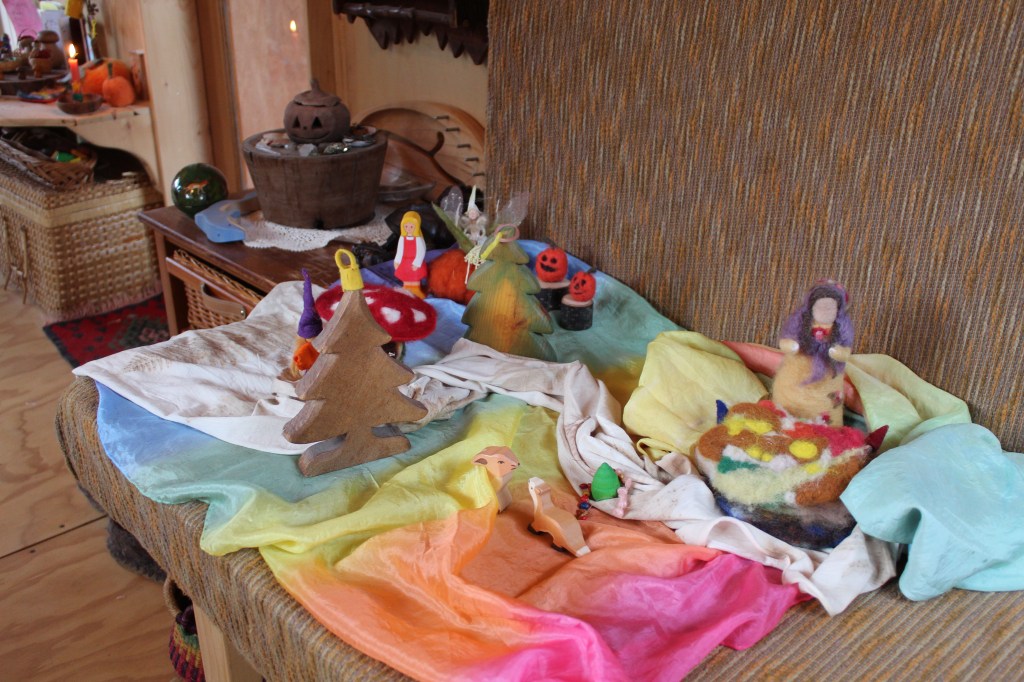
At the start of this week, after admiring the Autumn colours of the ash tree we can see from our window 👆 Phoenix asked to give us a puppet show during storytime. He carefully laid out an intricate landscape of silks, nature treasures, wooden animals, and felted gnomes and creatures. When he began to tell the story, I couldn’t believe it. He was telling Spindlewood, the story that I had planned to tell this week but hadn’t shared yet. Even without hearing the story for a year, he could feel the timing of the story connected to this exact week of the year related to what he was noticing in nature. Seeing him tell this story was a wonderful affirmation that not only does he feel connected to the yearly rhythm, but he feels a sense of agency within it that has inspired him to make it his own.
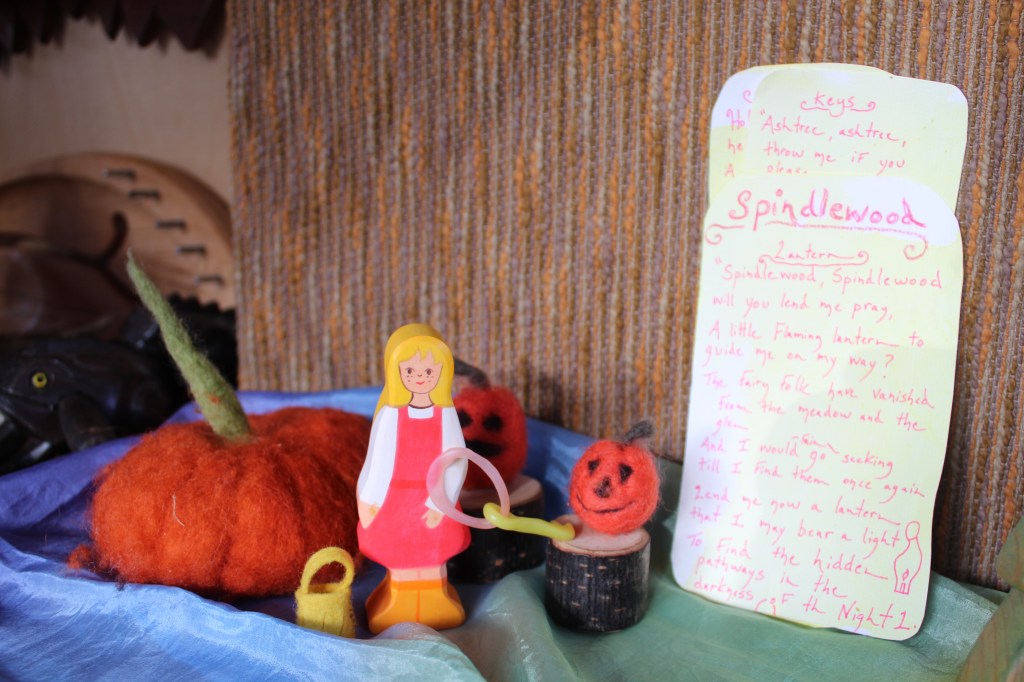
Spindlewood is a story of a child who braves a dark path to find her fairy friends as they prepare to rest with Mother Earth through the winter. The child encounters 3 trees along the way that offer gifts to help her find Mother Earth’s kingdom. A Spindlewood tree offers tiny glowing lanterns to light her way, an Ash tree offers gold and silver keys to unlock the fairy realm, and a holly bush offers glistening red berries to make a necklace gift for Mother Earth.
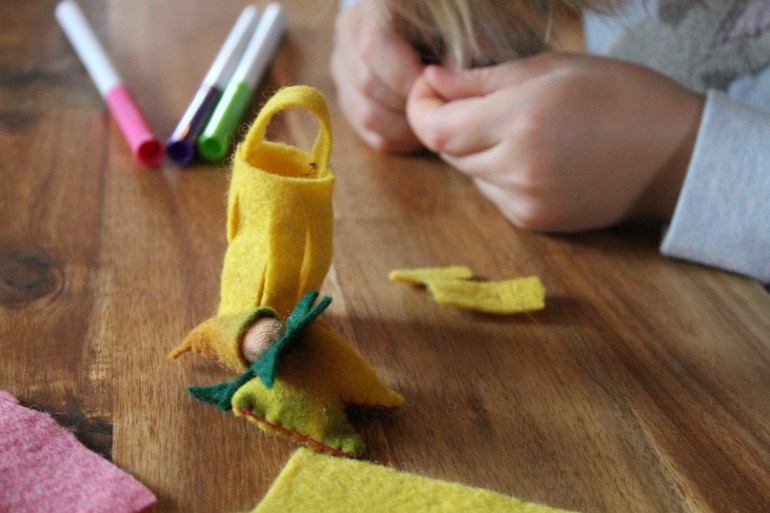
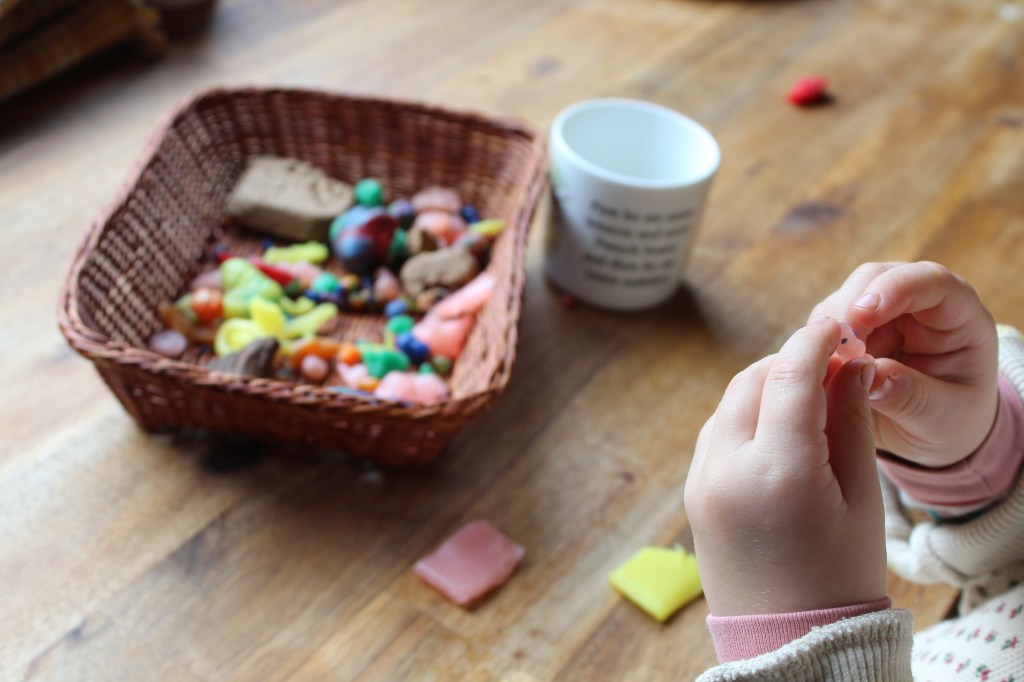
The children were especially interested in the gifts from the trees and so we made tiny felted lanterns, modelling beeswax keys, and beeswax berries strung into necklaces. These special props added magic and whimsy to the story. I have included the full Spindlewood story below. I hope you enjoy it as much as we do 😊
Spindlewood-This story, by Charlotte Comeras, is based on a poem by Rose Fyleman, which appears in Autumn of the Wynstones collection.
In a cottage at the edge of a village lived a little girl. All through the summer, she played in the meadow with the sun fairies and the wind fairies; she watched the water fairies as they danced dreamily to the song of the stream as it made its way merrily through the meadow and on into the wide world. When they were not too busy digging and looking after the flowers and trees, the gnomes were the greatest fun to play with, for they loved to laugh and play friendly tricks with the little girl.
Now one day when the trees were changing their green leaves to golden, red, and brown, the autumn wind blew through the wood and over the meadow singing:
“Mother Earth is calling, so children, you must go,
To gather round your Mother deep in the earth below.”
All the fairies stopped their dancing and playing when they heard the call and left the meadow. The gnomes also finished what they were doing and hurried off, for they knew that now there was other work for them to do deep in the earth.
The little girl was sad when she found that all her fairy friends had gone away. As she sat wondering where they could be, a wind fairy flew by in a great hurry.
“Wait,” called the little girl. “Where are you going?” But the only answer she heard was, “Mother Earth is calling.” Then the wind fairy flew into the woods and on. The little girl tried to follow the wind fairy, but it was no use – the fairy was gone.
As she came to the edge of the wood, the girl caught a glimpse of an old, old gnome hobbling along through the trees. He could not keep up with the other gnomes, but as he was so very old and wise, he knew that if he just kept going, he would find them deep in Mother Earth’s cave.
“Wait,” called the little girl. “Please tell me where I can find Mother Earth.”
“My dear,’ answered the wise old gnome, “that will not be easy for you. You must first find a lantern to guide you, for the way is dark. If you go along the golden path, there you will see a spindlewood tree. Ask for one of its lanterns. You will also need a key to unlock the door to Mother Earth’s kingdom. If you go along the winding path, you will find an ash tree. Ask it for its magic keys. Lastly, you must bring a gift to gladden the heart of Mother Earth. If you go along the prickly path, you will come to a holly bush. Ask for some of its scarlet berries to make a necklace with.” When he had said this, the wise old gnome hobbled away till he disappeared among the trees.
The little girl went deeper into the wood, not knowing how she would find the golden path which would lead her to the spindlewood tree. Suddenly, there before her on the path, she saw a golden leaf. “Surely this must be the golden path,” she cried joyfully. And it was.
All along the path there shone a golden light which grew stronger and brighter as the little girl ran along. Soon she came to a beautiful spindlewood tree covered with tiny lanterns. She sang,
“Spindlewood, spindlewood, will you lend me pray,
A little flaming lantern to guide me on my way?
The fairy folk have vanished from the meadow and the glen,
And I would fain go seeking till I find them once again.
Lend me now a lantern that I may bear a light,
To find the hidden pathways in the darkness of the light.”
The spindlewood tree then gave the little girl a tiny lantern that shone brightly. Holding the lantern carefully, the girl thanked the tree and set off to find the winding path.
She had not gone far when very softly she heard the sound of tinkling music. As she walked on, the pathway began to wind more and more. First, it twisted one way, then another, and at every turn, the tinkling music became louder and clearer, until at last, the little girl saw a beautiful ash tree with bunches of strange twisty keys hanging from its branches. She sang,
“Ashtree, ashtree, throw me if you please,
Throw me down a slender bunch of russet-gold keys,
I fear the gates of Fairyland all be shut so fast
That nothing but your magic keys will ever take me past.
I’ll tie them to my girdle and as I go along,
My heart will find a comfort in the tinkle of their song.”
The ash tree threw a bunch of tinkling keys at the feet of the little girl. Thanking the tree, she picked up the keys, tied them carefully to the belt around her waist, and went in search of the prickly path.
It was getting darker in the wood as the trees grew closer and closer together. Soon the pathway was so narrow that the little girl could scarcely make her way. She felt the branches and leaves prickling against her legs and face. Knowing that this must surely be the prickly path that led to the holly bush, the brave little girl kept going. Just as she thought that she could bear the prickles no longer, the pathway became wider and there stood the most magnificent holly bush covered with bright scarlet berries. She sang,
“Hollybush, hollybush, help me in my task,
A pocketful of berries is all the alms I ask,
A pocketfull of berries to thread on golden strands,
(I would not go a-visiting with nothing in my hands).
So fine will be the rosy chains, so gay, so glossy bright,
They’ll set the realms of Fairyland all dancing with delight. “
Thereupon the holly bush shoot itself and many scarlet berries fell to the ground. Quickly the girl gathered them together and made a beautiful necklace. “Thank you , dear holly bush,” she said. “Now I can go to Mother Earth and be with my fairy friends again.”
The little girl looked around and wondered where the doorway to Mother Earth’s kingdom could be. Then, further along the path, she caught sight of the wise old gnome’s pointed hat disappearing down a dark hole among the roots of a huge oak tree. Holding her little lantern, the girl climbed down the hole and found herself in a tunnel at the end of which was a wooden door. Taking one of the twisty ash keys from her belt, she put it in the keyhole, where it fitted perfectly. It turned in the lock and the door swung open. There inside was a wondrous cavern. From the ceiling hung many, many lanterns like her own, and in the light, the little girl could see the smiling faces of all the fairies. Some of them had already curled up sleepily in the folds of Mother Earth’s cloak as she sat there with her arms outstretched to welcome the little girl.
Shyly, the girl stepped forward and Mother Earth lifted her up onto her warm lap. The little girl gave the necklace of scarlet berries and watched as Mother Earth, her eyes shining with joy, carefully put it on.
“Thank you, dear child,” said Mother Earth. “I have been waiting for you. The fairies have been telling me about you, and the wise old gnome said you would come.”
“May I stay here and sleep on your lap?” asked the little girl as she began to feel very sleepy.
“Oh, no, my child, Your own dear mother and father will be calling you soon and there is something I would like you to do for me.” Mother Earth reached into her deep pocket and brought out a tiny sack woven with gold and silver threads.
“Here are some precious seeds, my child. Plant them in your garden and when the shoots peep out of the earth, you will know that your fairy friends are on their way to play with you again.”
The next moment, the little girl could hear her mother’s gentle voice calling, “Wake up, my little one. You will get cold sleeping out here in the meadow.” The girl sat up and rubbed her eyes. There was something in her hand and when she looked to see what it was, she saw the tiny sack woven with gold and silver threads, and she could feel the precious seeds lying safely inside.
“Mother, I’ve been to see Mother Earth,” whispered the little girl, and her eyes were shining.
As the days grow shorter and the summer sun fades, we begin to look for a little sparkle to brighten the days. When I’m looking for sparkle, I always turn to magic. Potion play has become a bit of a tradition around here as we move towards Halloween and get into the witchy vibes by mixing up potions. Children love the messy fun of potion play and it’s a great way to introduce early science concepts through imaginative play. Intentionally mixing ingredients together calls us to observe reactions, and transformation. Smells, textures, and colours change through playful processes of mixing, and adding materials together.
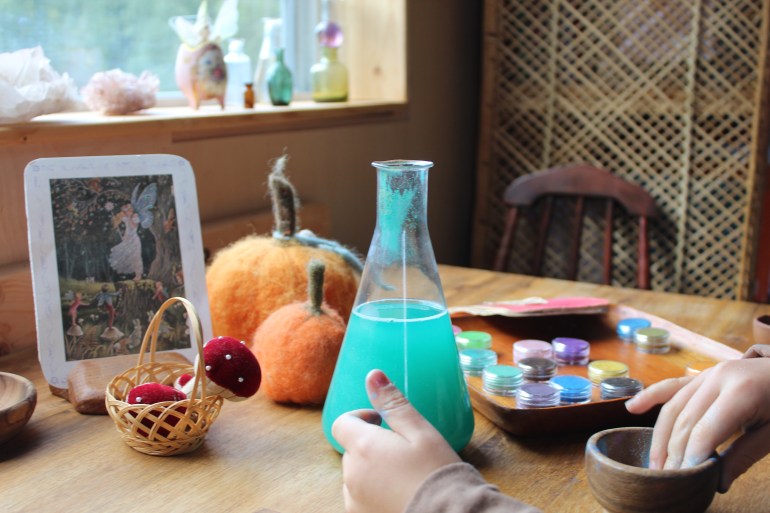
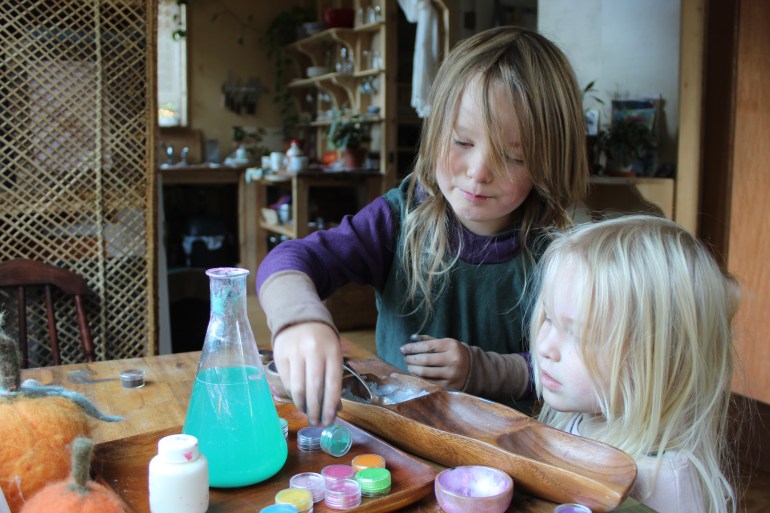
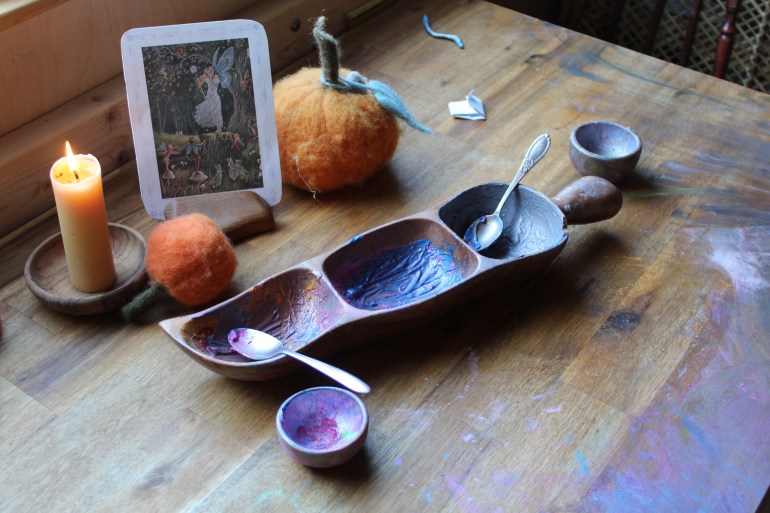
Today we kicked off our potion play with a big splash of colour. I set up an invitation to play using an old chemistry beaker and several tiny pots of cosmetic grade mica powder. We experimented with adding different mica colours to water and noticing the changes. Then we added mica to tempura paints to create opalescent paints. The effect was amazing!
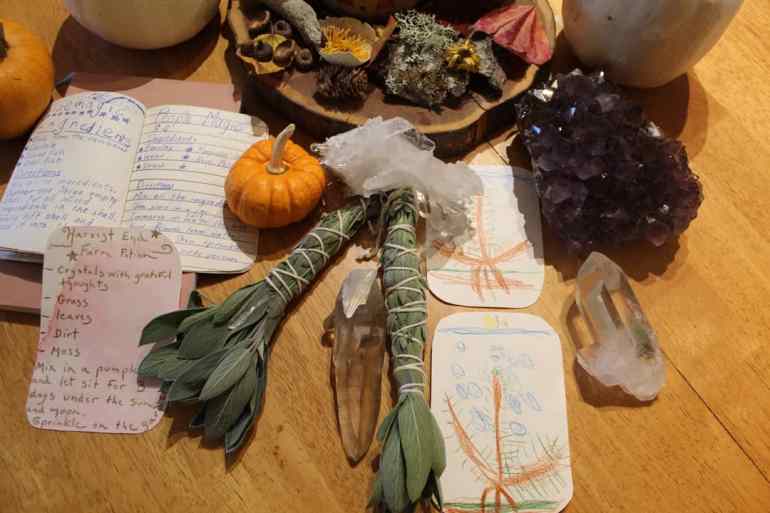
As part of our yearly Halloween tradition we document our potion recipes in a book that I started as a child. We do 4 main potions reflecting the 4 elements Earth, Air, Fire and Water. Each potion is meant to connect us to that element. The potions are co -created with the children and change yearly as their interests and knowledge expands. I try to use ingredients that we have on hand and we forage all the herbs and flowers as part of the experience. I have included our current recipes below and hope it inspires you have a go at potion play.
Earth:
Compost Soup Potion (This one is an exploration into the helpful nature of micro organisms)
You will need:
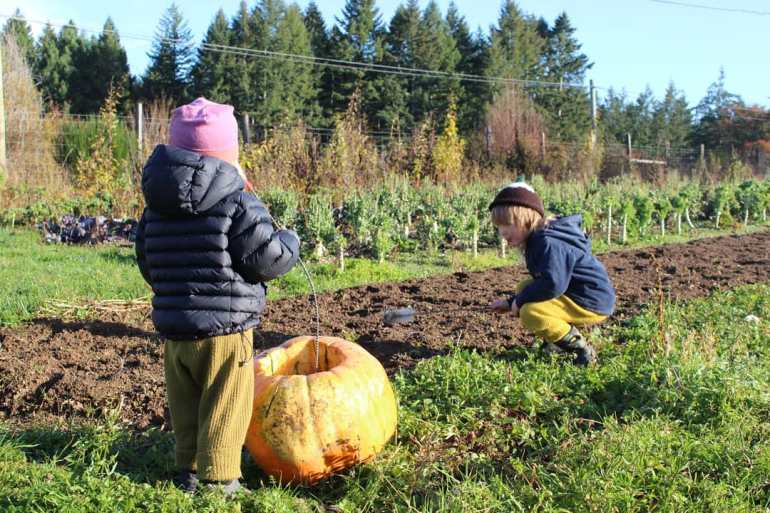
1 large pumpkin
Grass clippings, flower petals, herb leaves and root matter
Water
Method:
Hollow out the pumpkin and use as a bowl
Into the pumpkin place plant matter
Cover with water
Let sit inside the pumpkin bowl, in a warm outdoor spot for 1 week. Stirring daily. Notice how the plant matter is breaking down and changing. When it is good and stinky pour onto the garden or lawn as a nourishing compost offering to plants.
Air:
Clear the Air Calm Down Potion
You will need:
Distilled water
Calming essential oils like, chamomile, lavender, clary sage or eucalyptus.
Glitter
Small glass spray bottle
Method:
Combine water, essential oils (look up water to oil ratio dependent on the size of your spray bottle), and a pinch of glitter.
When overwhelmed, take a few deep breaths of fresh air and use this calming face spray. Watch the glitter swirl for extra soothing.
We keep this spray in our “calm down basket” which has been an a valuable tool in learning about self regulation and moving through big emotions. See more on that in my blog post titled “Calm and Collected-Tools for Moving Through Big Emotions”
Fire:
Sage and Cedar blessing potion
Sage leaves and stems
Cedar chips or shavings
Red, orange or gold mica powder
Method:
Mix ingredients together in a bowl. Store in a special bottle and sprinkle on a camp fire for a beautiful cozy scent and sparkle.
Water:
Magnesium Bath Potion
2 Cups Magnesium Chloride Flakes
2 Cups Himalayan Salt
10 drops essential oil (we like lavender)
1 cup dried flower petals or herbs
1 handful small Amethyst crystals
Method:
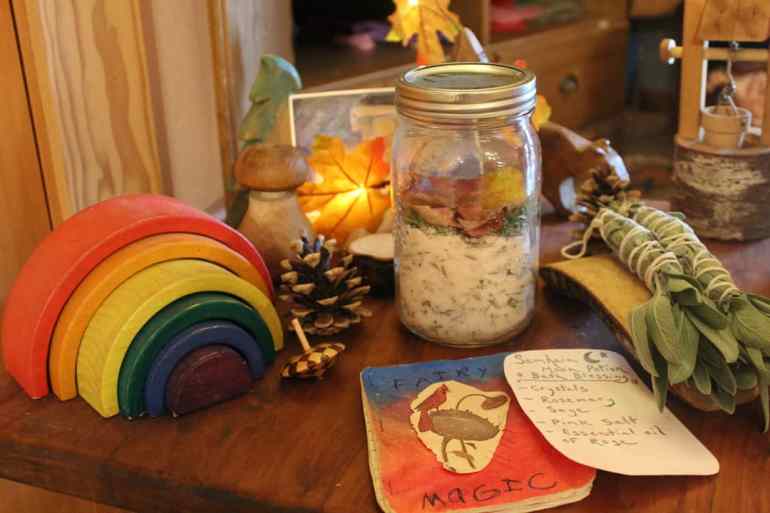
Mix ingredients together in a large bowl and mix. Add 1 cup to bath for a relaxing, calming soak. If you’d like to make after bath clean up easier plave bath salts in a muslim bag or cheese cloth before adding to the bath to keep dried herbs and petals out.
We like to put our bath potion out under the full moon to capture some of those magical moon rays.
Summer has arrived early to the farm, inspiring us to spend long days outside. Phoenix and Sky have been noticing all the animal and insect activity and have become particularly interested in Monarch Butterflies. This has been a wonderful “in” to a study of Monarch Butterflies, their amazing migration to Mexico and ultimately an exploration of transformation, learning from the butterflies how they flow through transitions to complete an incredible journey that spans multiple generations each year.
I continue to start each homeschooling lesson from a place of co -creation with the children. This is not child led learning but a collaboration. Their interest is an opportunity to connect, question and inquire together, to expand our understanding of the world. In practice this usually begins with me noticing an interest emerging, or Phoenix and Sky asking to learn more on a subject. Then we sit down together, and talk about what we know about that subject and what we’d like to know, creating a mind map to guide our learning. Sometimes I have many answers I can share, sometimes I use the questions to guide my research to create lessons, or we research together. Often, we call in a family member or friend who is an expert in that field of study. This can look like informal conversations in the case of family, or projects directed by Dad who is an engineer, artist and foodie who shares many of the same interests as Phoenix.
Inspired by the subject we are studying, alongside the season, I create a simple circle, with a land acknowledgment, songs, poems and a story. The story is often a pedagogical or teaching story which aims to support the children through a challenge or issue that is present in their lives.
Our current story is a story about trusting and flowing through transitions conceptualized through the eyes of a caterpillar and tadpole as they transform through their life stages. I wrote this story last year to help the kiddies through the big moving transition home from Australia. I am telling it again now to support us through the change of welcoming a new baby. Please feel free to use this story with your kiddies if it resonates with you. It has been a powerful one in our family and I hope you enjoy it too 😊 I have included links to the videos of our butterfly inspired circle here 👉 https://youtu.be/4mMoWRaKQMA
Inspired by butterflies we have also been working on a butterfly attracting wildflower garden. This project has spanned several afternoons and has been a great way to work through extra energy around 3pm, with digging, moving dirt and looking for earthworms.
Thanks for reading and please subscribe to my blog to receive nature inspired homeschooling tips, crafts, songs and stories to your inbox ❤️
Happy love day friends! Although we’ve been enjoying some signs of spring around the farm, today we’re having quite the snow day.
I’m a big fan of Valentine’s day and the opportunity it offers to celebrate love 🤗
Our Valentines rituals have been growing with our family. As the kids grow their attention and interest in the holidays evolve and change, so I expect this process to continue. The core traditions are a familiar base that anchors us to the seasonal rhythm throughout the year and feel like returning to an old friend.
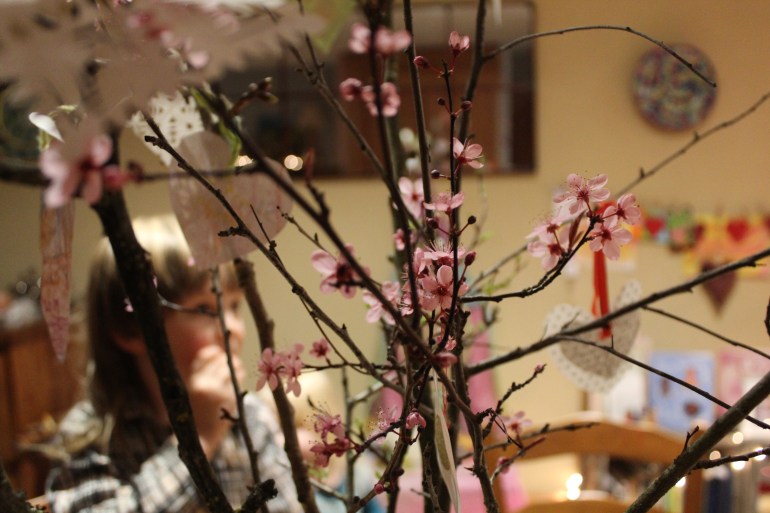
On the week leading up to Valentine’s day, on our nature walks, we gather fruit tree branches still dormant in the outdoor cold, we place them in a vase and watch the magic unfold as blooms appear over the course of the week. This year we did a little experimentation, and chose branches from a variety of trees. Phoenix has been wondering and hypothesizing about the results. So far we have several blooming branches from a plum tree, and tiny green leaves uncurling from a maple. On this “Valentines Tree” we hang small valentines from present and past reminding us of the love of friends and family. This year we also hung cut out paper snowflakes with the arrival of snow.
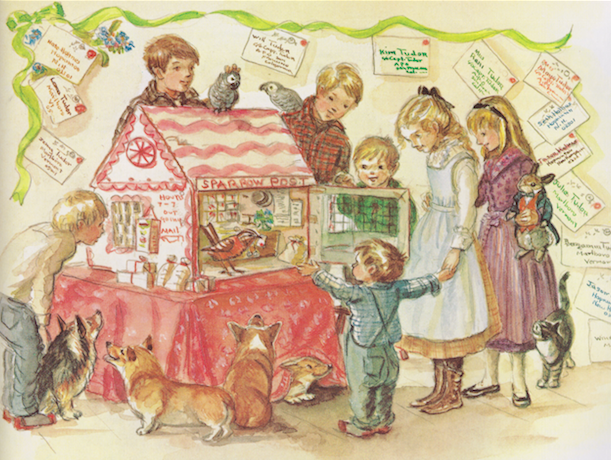
This year, Phoenix was very keen to make a Valentine’s post box which was a new addition to our Valentine’s traditions but is a keeper for sure. He was inspired by this scene by Tasha Tudor. He spent hours, cutting, painting and gluing until we had a lovely spot to post our Valentines ready for Valentine’s morning.
After a Valentine’s cinnamon bun breakfast this morning, Phoenix and Sky created a special space in the living room, using silks and pillows then placed the post box in the center. They placed their dolls and toys around the space, along with spots for us and we all received a love note or carefully painted card. Later in the afternoon, we braved the snow and delivered Valentine’s to family and neighbours door steps 💐
Another engaging Valentines/ Spring craft this week was flower painting. This is such a simple and satisfying one using only flower petals and water colour paper. I have full instructions included here in a previous post https://heartsonghomeschool.ca/2020/09/03/painting-with-flowers/
“The third light of Advent is the light of beasts,the light of hope, that we see in greatest and in least“-Rudolph Steiner
There is so much to look forward to this week! We’ll be celebrating the animal kingdom, weaving into our days special care of the animals on the farm. We’ll install the new birdfeeder, built by my partner and kids, and extend that focus on our animal friends with sweet animal stories and crafts.
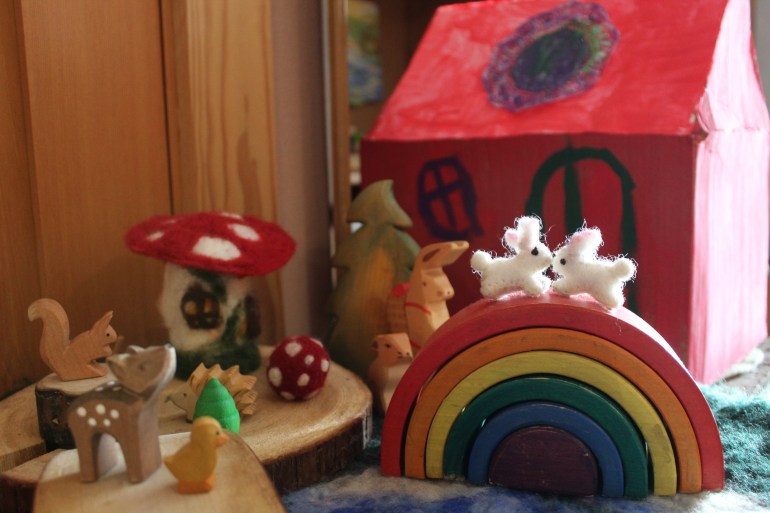
Building on last week, the Advent garden is now home to crystals, plants and animals. The children have been enjoying playing house with the Advent garden and it has taken on a life of its own through their imaginations .
Here is my plan for Week 3-Animals
Each day includes a daily advent gift. On homeschool days the gift ties in with a craft along with a story. Each week in our homeschooling rhythm I perform the story 3 times with felted puppets, on the last day I invite Phoenix to be the puppeteer and he loves telling the story, often with new insights and plot twists.
Sunday-
Advent gift- Small wooden animals inside a walnut shell nest. Inspired by this page from “A Time To Keep”, By Tasha Tudor 😍
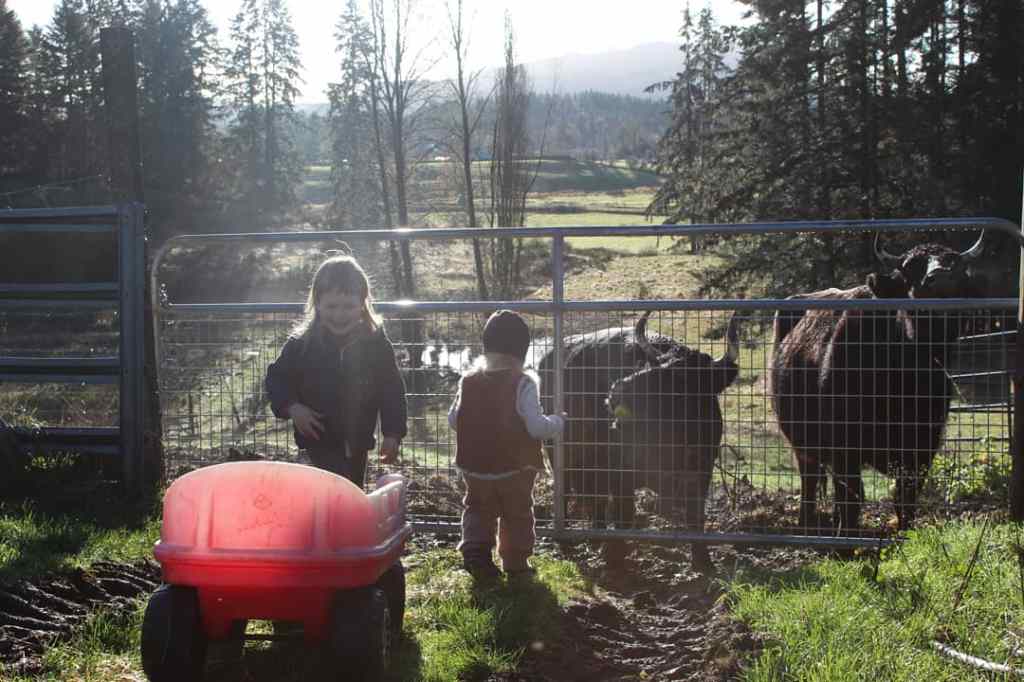
Activity-Go for a family walk and show special care to the farm animals. We are usually in charge of the chicken’s care, but this week we’ll be bringing treats to all the animals that live on the farm. We’ll fill the chicken house with extra hay, bring the cows some treats (they like singing too and 😁) and hang our new bird feeder for the local birds.
Monday-Homeschool
Advent gift- Wool mittens
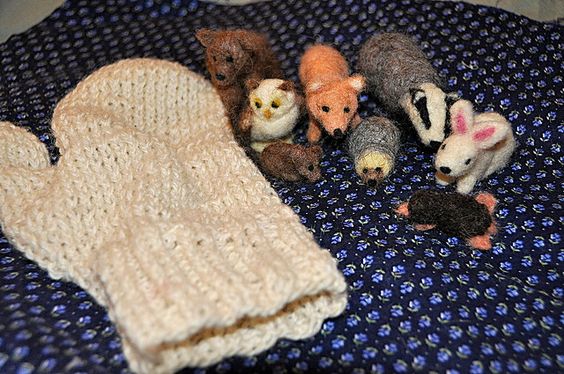
Story-The Mitten, By Jan Brett (See below) I’ll be telling this story using felted animals and an old mitten. I found this picture on Pintrest that inspired me to tell this story, but instead of creating all the animals from scratch, in my telling, I’ll include the felted animals that I have on hand.
Craft- Finger knitting with thick wool yarn. Finger knitting is a great fine motor skill practice for kids 5 and up.
Story: The Mitten, by Jan Brett(as adapted by Lavender Blue Homeschool)
Once upon a time there was a boy named Nikki who lived with his grandmother. On cold winter days they would sit by the fire and warm their hands just so. Outside the world was covered with snow, beautiful glittering snow all around on the ground, in the trees, and on the rooftops. The whole world was white with snow. And Nikki told his grandmother, “I would like some mittens as white as the snow.” His grandmother laughed and told him that he was sure to lose a mitten if it were the same color as the snow! But Nikki said “Please, Grandmother, please make me mittens as white as the shimmering snow!”
So his grandmother agreed, and she gathered her balls of white yarn and her needles and soon she had made him the mittens. He whooped with joy when they were finished and he quickly dressed in his coat and hat, his warm boots and his soft and beautiful new white mittens and he ran outside to play. It was a crisp clear day and the sun sparkled on the snow and Nikki ran and jumped and made snowballs to throw against the trees. He walked along the top of the stone walls and jumped into the soft snow and then he ran up hills and rolled back down. He started to climb a tree but it was too difficult with his mittens on so he tucked them into a pocket. And what do you suppose? One of those mittens fell down into the snow! Nikki didn’t notice and he went right on running and playing and shouting all the wonderful afternoon.
Pretty soon a little mole came tunneling up through the ground near the mitten. She was curious so she burrowed inside the mitten and found it to be cozy and warm. Then a squirrel scampered by and thought that the mitten looked like a nice place to nest so he cozied inside as well. Next a badger trundled along and decided that she could use a rest in that warm mitten. A fox trotted up to the mitten and sniffed it. He decided it must be warm inside so he stuffed himself in, and by now the mitten was becoming quite stretched out! Now a bear lumbered by and though she was big and the mitten was crowded, she did not want to be the only one left out in the cold. So she turned her tail and scootched herself into that mitten! A mouse scurried by and squeaked in surprise to see a white mitten all stretched out with a mole, a squirrel, a badger, a fox and a bear all snuggled together inside! She wanted to try it too so she jumped up on the bear’s nose. Those little mouse paws made the bear Ahh….Ahhhh…AAACCHHHooooo!!!! The bear sneezed! And all the animals went tumbling out into the soft snow, and the mitten went flying up into the air!
Nikki had finished playing and was looking everywhere for his mitten when much to his surprise he saw it flying through the air! Nikki caught his mitten with a “Whoop!” and ran back inside to warm up by the fire. He showed his mittens to his grandmother. “See, Grandma, I have both my mittens!” And grandmother laughed and laughed, for one mitten was the size of Nikki’s hand, but the other mitten was the size of Nikki!
Tuesday-Homeschool
Advent gift-Mini felted bee in a walnut shell
Story-The Mitten, by Jan Brett
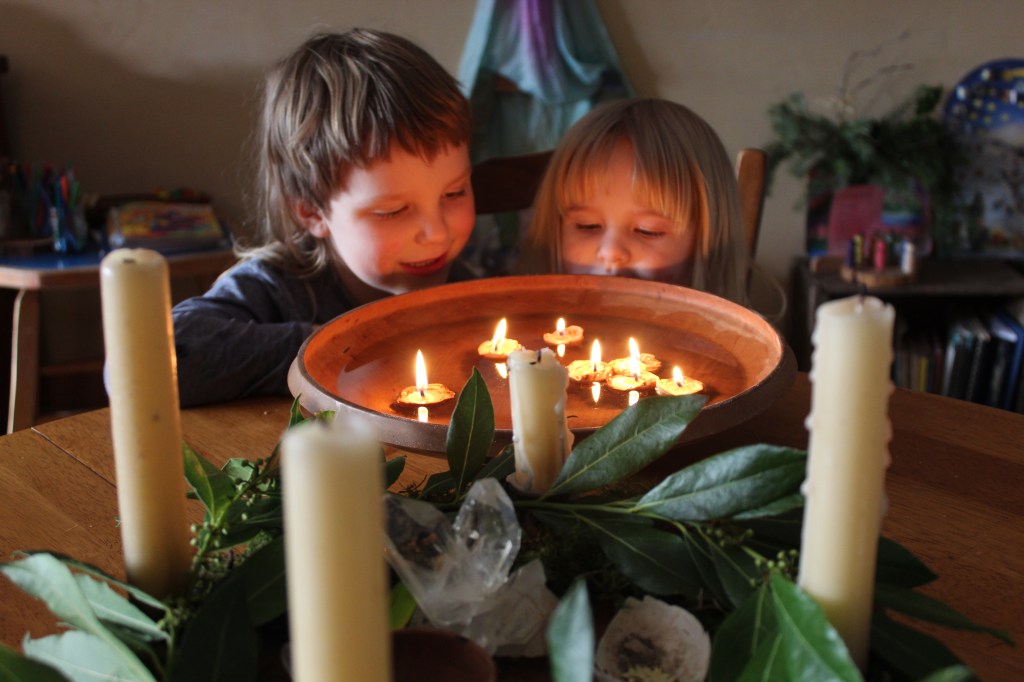
Craft- Make floating beeswax candles inside walnut shells
Advent gift-Animal stickers and little animal shaped notebook.
Saturday-
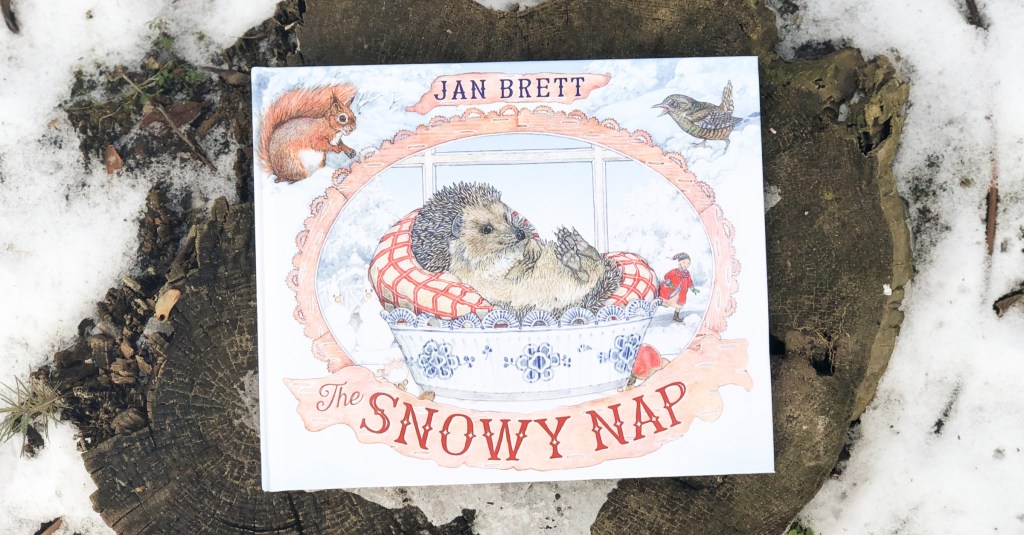
Advent gift-Book-A Snowy Nap, By Jan Brett
Activity-Today I’ll be gathering boughs and preparing a spiral in a sheltered outdoor spot, in preparation for tomorrows Solstice Spiral. This is a lovely way to deepen the experience of bringing light to the darkness with friends and family. This also works in a Southern Hemisphere setting for the Summer Solstice as a way to celebrate the gifts of the summer on a long balmy evening. See my 8 Wurundjeri Seasons blog post for details of Summer Solstice Spiral.
Method:
– Create a spiral with a path large enough to walk through, using evergreen branches.
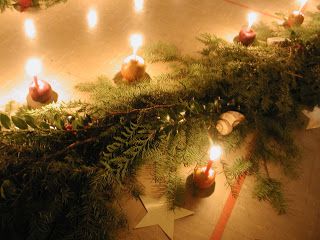
-A large candle in a jar is placed in the centre of the spiral. Each spiral participant is given a candle secured in a red apple as the candle holder.
– Create a circle of friends and family around the outside of the spiral. While the group is singing carols, each person is invited to enter the spiral with their candle. They walk to the center of the spiral to light their candle and say a wish or prayer to themselves or aloud if they feel comfortable. Then they walk out finding a place for their candle to stay along the way.
Thanks for reading lovelies! I’ll be sharing photos of our Solstice Spiral in next week’s post ❤
“The Wurundjeri recognize November and December as the season of Yam Daisy Harvest and Men’s business season, which is the last of the eight seasons on the Wurundjeri calendar. It runs from late October to late December.
This is the period when the yam daisy, also known as the Australian parsnip, is at its tastiest and once could be harvested in great quantities. The introduction and over-grazing of sheep virtually eliminated myrnong within three years.
The warm dry weather at this time of the year was also conducive for men to travel and visit pilgrimage sites for male initiation.
The yam daisy harvest and men’s business season ends on the Summer solstice and thereby completes the calendar of eight Wurundjeri season. The arrival of the hot north wind Summer is heralded by the flowering of Coranderrk, which is otherwise known for the obvious reason as the Christmas Bush.”
– The Eight Wurundjeri Seasons, by Jim Poulter
I was first inspired to write this seasonal activity guide as a documentation of my family’s process towards belonging in Melbourne, after we arrived from Canada in 2018.
Through my motherhood journey I have learned that whatever you put energy into will grow and flourish. A new born baby and mother need skin to skin time to begin the process of attachment and milk production. That same logic can be applied to our connection to place, if you want to feel connected to the land you need to spend time fostering a personal sense of belonging in community and nature.
We can do that by simply being outside, in the city or wild places, noticing plants, creatures, and changing seasonal patterns. We can extend that to engage with the elements through learning basic survival skills like fire building and creating nature shelters. We can connect with our community through seasonal celebrations, shared songs, and stories. We can bring nature into the home through, foraging or growing food, nature crafting, making ferments, and healing plant oils.
When I arrived in Melbourne, I tried to make sense of the surroundings with my Northern Hemisphere way of seeing and it left me feeling disconnected. There was a day in January when I walked outside and was hit with scorching sun and a hot wind of 40 degrees. I thought to soldier on to the park with the kids, when an elderly lady warned me to take the kids home and stay cool as the baby could easily overheat in the stroller with UV mesh surrounding it. I panicked and headed home unsure of what to do when it is so hot outdoors. I came to realize that summer can mean finding indoor activities to hide from the heat, it can be a contracting time and not the soft warm expansion I was used to from Vancouver.
I wasn’t rooted in the seasonal rhythm and with the changeable and often extreme weather, I didn’t know how to relate to this land. My weather app was a bit of a help, but I needed to know how others lived and thrived here. So, I talked with folks about the weather and their expectations of the seasons, and I found I got very different answers depending on who I spoke with. I realized many folks are not spending time outside living in the elements or do not crave emersion in the seasons. I needed to find the experts. Then I met Jake and Emma at a wonderful local playgroup at Beaton Reserve and everything began to make sense. They taught me about the Wurundjeri people who are some of the first people of this region, who instead of 4 seasons lived within 8 and it was like a veil was lifted. These 8 seasons precisely describe the seasonal shifts here and they associated different important communal activities to each season. December isn’t early summer it’s Myrnong Kulin Jumbunna, Season of the Yam Daisy.
This way of seeing the seasons in retrospect seems so obvious, why was I trying to fit this land into my Northern Hemisphere expectations? I wouldn’t be the first to make the mistake and it highlights the importance of looking to indigenous knowledge.
Since I’ve gained that piece of the puzzle, I realized that belonging comes from honouring the uniqueness of place and finding a way to relate to it. These activities grew from our daily walks around the Yarraville neighbourhoods. We began to notice what plants were flowering and what fruit was ripe. We asked neighbours if we could harvest their unwanted fruits and flowers. We made connections and began to feel at home. These activities helped to root us here, to make sense of this seasonal rhythm and natural surroundings. Since then, I have expanded this project to include the children, I care for in my family daycare. The activities have evolved and taken on more meaning through the children’s engagement and through the wonderful community we found with Sacred Place Homeschool and Trugo Playgroup.
Purpose of Guide :
-A seasonal guide of activities, recipes and celebrations focused on connecting with nature and community through practicing traditional homemaking skills in connection with the 8 Wurundjeri Seasons.
– Many of the foods and natural materials used by the Wurundjeri are no longer available for foraging. Although using different plant materials, these activities are meant to reflect and honour the seasonal work of the Wurundjeri.
-The activities are built around using fruits, flowers and nature objects specific to the Melbourne area, that can be found and harvested from neighbours gardens, laneways and parks.
-The activities are designed to supplement a home rhytmn or alongside a Steiner inspired curriculum of songs and stories.
-These activities were chosen for the guide as they were the children’s favorites, they became like old friends that we could return to every season for comfort and nourishment.
-These activities have been chosen for their accessibility for children and simple enjoyment they offer. I did the activities with my daughter and son starting at 1.5 years old and 3 years old. Different age groups will engage with the materials and concepts in varying ways depending on their development and interests.
Calendula Sun Oil–
This golden healing oil can be used as a body oil for dry skin or can be added to a beeswax balm to create a salve for cuts and bruises.
Ingredients: Calendula flower heads, Olive oil
Method:
-Gather fresh Calendula flowers. The strongest medicine is in the green base of the Calendula flower, so be sure to select whole flower heads.
-Using a mortar and pestle or rock, gently mash the flowers to help bring the juices out.
-Loosly pack the flowers into a jar, leaving an inch of space at the top. Pour oil over the flowers until they are completly submerged under oil. Fill oil nearly to jar brim to reduce oxidation of the oil and molding.
-Place the sealed jar in a sunny window. Shake daily for 4 to 6 weeks.
Using fingers press, mash and spread flowers onto thick water colour paper to see what colours the petals make. To see other other wonderful activities like this one, check out my mentor Carol Litnaitsky here https://www.youtube.com/c/PlayLearnTeach/videos
Solstice Spiral-
Celebrate the Summer Solstice and longest day of the year, with a special evening tea in the garden or park with family and friends.
– Create a spiral with a path large enough to walk through, using locally foraged branches and floweres.
– A large candle in a jar is placed in the centre of the spiral. Each spiral participant is given a their own unlit candle inside a jar.
-Create a circle of friends and family around the outside of the spiral. While the group is singing, each person is invited to enter the spiral with their candle. They walk to the center of the spiral to light their candle and say a wish or prayer to themselves or aloud if they feel comfortable. Then they walk out finding a place for their candle to stay along the way.
Midsummer Night’s Flower Crowns or garlands:
Method: Gather Everlasting Daisies (The organic veggie store in Seddon is a great source)
-Using a needle and fishing line sew the Everlasting Daisies through their center until you have a string the desired length.
-Tie around your head as a crown or hang in long garlands to decorate the house and garden for Solstice.
I hope you enjoyed this post 🙂 Next season’s guide for Winmallee Yallambie-Gunung (High Summer) is coming soon!! Subscribe to the HeartSong blog to receive the next guide to your inbox ❤
“The Second Light of Advent is the Light of the Plants, Plants that reach up to the sun and in the breezes dance” -Rudolph Steiner
Happy Second Week of Advent friends!! I hope you enjoyed some slow, cozy times with your family ❤
Our first week was lovely. The mist has temporarily lifted here and we’ve had some sunny days. At storytime each morning, the sun was just right, as to beam through the window to highlight the story table adding an amazing glow to the moment.
The children were excited about the Advent crafting, and in true Phoenix style, he had a few ideas, which added to and changed the crafts I had planned. As always the co- created activities became the most memorable, highlighting the importance of remaining open to change and working to support an emergent curriculum.
Building on last week’s structure, each day this week includes a daily advent gift. On homeschool days the gift ties in with a craft along with a story.
Activity- Go for a family walk to collect chosen Christmas tree. Decorate Christmas tree!
-Add a few plant based nature treasures to join the crystals in the Advent garden.
Mon-Homeschool
Advent Gift-Paper white bulbs
Story- The Tree that Dreamt a Flower (See story below) This story is one of my favourites from childhood and I’ve been looking forward to sharing it with my kids. It might be a bit long for under 5 year olds, but could be told using felted puppets in a simplified version or read to older children. For children and adults alike this story holds powerful meaning which expresses the spirit of the season without focusing on the religious aspect.
Craft- Make planters for the bulbs with vases and crystal pebbles, add water and place bulbs in a sunny window to be ready to bloom for Christmas.
The Tree That Dreamt A Flower, adapted from the story by Isabell Wyatt
“There was once an archer, who lived amongst the stars, and his arrows brought not wounds but love for all things. One day he loosed an arrow which fell to earth on a cold and naked mountain side, where no plant had ever grown. The arrows feathers turned into roots, and the arrow grew into a tree. This tree was the first fir tree.
The tree grew up pointing to the stars, and as the tree looked up at the stars, she loved them. So, every day she grew taller, for always she longed to reach them. Now the stones of that desolate place had rejoiced when the green fir tree came to live amongst them; but when they saw her yearning always towards the stars, they figured she would grow right away from them. So, the stones cried out to her: “Do not forget us all together, dear fir tree. It is right that you should love the stars, but love earth a little too.” The fir tree listened and looked down and was sorry for the stones imprisoned in the ground, and she sent her roots down deeper to embrace them. She began to love the stones and the soil a little, as well as the sky and the stars.
Then the small creatures who lived on that cold and bare mountain side, who longed for shade and shelter, cried out also to the firtree: “Dear fir tree, do not forget us either. We are glad that your head should be lifted towards the stars; but will you not lower your arms a little towards the earth, to bring us shade and shelter?” And the fir tree listened and looked down and was sorry for the small creatures of the mountain side. She let her branches droop until the lowest brushed the ground with their outstretched fingers and the small creatures of the mountain side crept beneath the fir tree thankfully, and found shelter there from the storms, and warmth when the night was cold.
Now with her sturdy trunk, her drooping branches, and her sharp tip pointing to the stars, the fir tree begin to show in her shape that she was an arrow which had turned into a tree. She grew to love earth more and more, and to take more and more soil into her sap, until presently she was wrapped in bark, and her wood grew to have less and less the softness of a plant, and more and more the hardness of a stone. And now, where she had dropped her leaves to the ground, the soil became gradually richer, so that mosses, and small creeping plants, and presently taller plants, also began to cover the mountainside.
Water plants begin to grow in the little mountain pools, which the rain left between the rocks. Amongst these, was a lily plant which looked up in love and wonder at the fir tree and listened with delight and longing when the fir tree spoke of the stars, to the stones and small creatures nestling beneath her bows. To them it was all like a wonderful fairy story, for the stones were imprisoned in the ground could not see the sky, and the little animals going on all fours could not lift their heads high enough to gaze upward at the stars. The moss, and the stones, and the small creatures and the lily plant said: “Oh if only a star would come down and live amongst us!”
Now the fir tree often pondered how this might be brought to pass, for she too longed for the stones and mosses and the small creatures of the mountain side to be able to share her own joy in the stars. One night she had a dream, in this dream she spoke aloud a magic spell, which called strongly upon a star to come to earth, and a star came curving like a falling spark out of the sky and entered her sap. Presently, out through the bark of one of her branches the star broke, and folded in a bud; and the bud opened into an exquisite delicately tinted flower with tender petals. That flower was the most beautiful thing which had yet been born upon the earth. For all this happened long long ago, when the earth was still very young, and there had never yet been any flowers at all; so that the Fir tree ‘s dream was the first dream of the first flower.
The lily plant looked up in love and wonder at the fir tree and saw the wonderful pictures of the fir tree’s dream painted on the air around her. Now when the fir tree woke, she remembered her dream; and she remembered the magic spell she had spoken aloud in her dream. She said to herself: “Is this then the way to bring down a star to gladden the earth? Can I make my dream come true?” So now she spoke aloud again the magic spell of her dream, calling strongly upon a star to come to earth.
The lily plant looking up to her in love and wonder, heard her speak aloud the magic spell. Then, just as in her dream, a star came curving like a falling star out of the sky, and enter the fir tree’s sap. Presently, again as in her dream, out through the bark of one of her branches broke the star, and folded into a bud. But what happened next was different from the dream. For the strength and stiffness of the fir trees wood entered into the bud, so that this became woody too. It sat on her branch like a stone, the colour of a stone; and when it opened it had not the tender delicately tinted petals of the exquisite flower of her dream, but thick, hard scales. It was not a real flower; it was a fir cone. The fir tree cried in distress: “I can never make my beautiful dream come true! There is too much soil in my sap.”
She was so sorrowful at her failure that she began to weep. But through her weeping she heard a sweet voice, speaking words of comfort to her from below. When she looked down, she saw that it was a lily plant which grew in the mountain pool the rain has made between the rocks. The lily plant said: “Do not weep dear fir tree, for you have done a new and wonderful thing. You have taught the stars the way to become flowers; and with your leave I and other tender plants can still make your dream come true.” And the fruit tree dried her tears and answered: “With all my heart.”
So, the lily plant spoke aloud the magic spell which she had learned from the fir tree, calling strongly upon a star to come to earth. A star came curving like a falling spark out of the sky and entered the lily plants sap. Now there was no soil in the lily plants sap, for she lived with her feet in the water, and every part of her was soft and delicate and tender. So now a stem rose from between her leaves, lifting the star aloft, enfolding in a soft bud. The soft bud opened into a delicately tinted flower with tender petals, as beautiful as the flower in the fir trees dream. This was the first real flower; and the first real flower was a lily. Because the star which had entered the lily plants sap was a six pointed one, the lily had six petals.
Just as a lily plant, in love and wonder, had learned from the fir tree, so other tender plants learned from the lily plant how to call stars down from the sky and turn them into flowers. The fir tree rejoiced to see her dream come true, and the flower of the lily plant told her: “I heard a prophecy among the stars, dear fir tree, while I was still a star myself, before I came to earth. And this was it: because you were the first plant to long to bring a star to earth and give birth to a flower, and because you long to give this beautiful gift to the stones and the small creatures, the time will come when once every year you will be covered from tip to toe with stars and flowers and gifts. And just as the small mountain creatures love you now, so little children everywhere will love you. “
And that is how the archers arrow became the Christmas tree.
Tue-Homeschool
Advent Gift- Handmade pine cone ornament
Story- The Tree Who Dreamt a Flower, By Isabel Wyatt
Craft- Make pine cone ornaments or pine cone bird feeder.
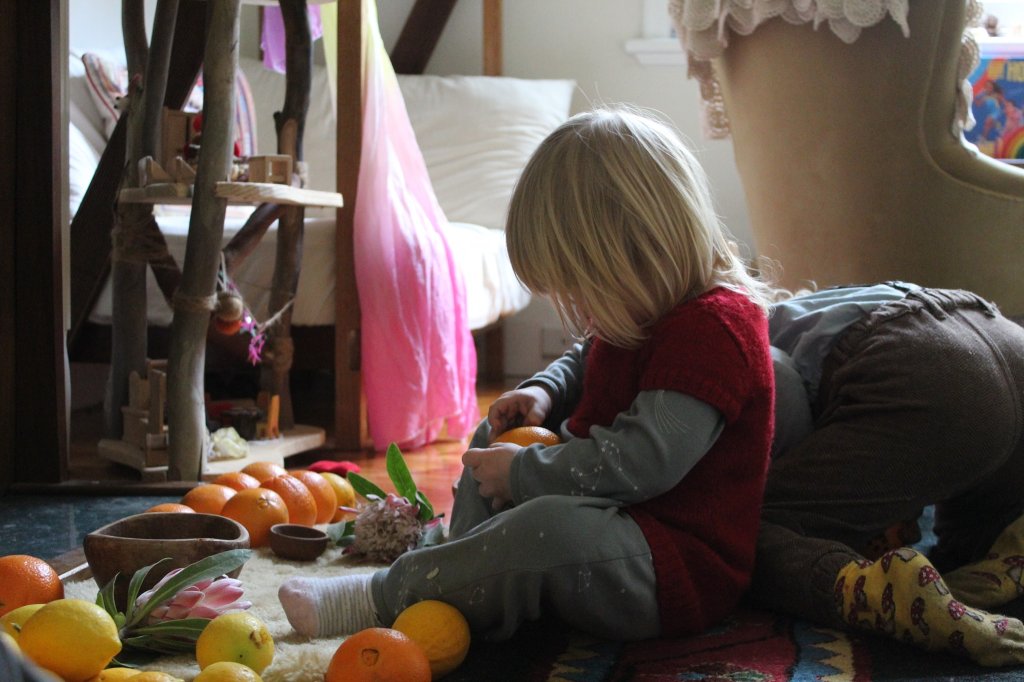
Bonus activity: Make an invitation to play with oranges placed in a bowl, cinnamon, cloves and nutmeg in little wooden bowls and a mortar and pestle for grinding. Kids could experiment with scents and create preserved oranges by sticking the cloves into the oranges.
Fri-
Advent Gift-Houseplant for child’s room
Sat-
Advent Gift- A variety of sprounting seeds such as Chickpea, Mung Bean, and Lentil to be grown into nutritious sprouts for eating through the winter. https://www.westcoastseeds.com
The first light of advent is the light of stones, stones that live in crystals, seashells, and bones– Rudolph Steiner
Sometimes I joke that I became a mother just so I could celebrate the seasons and festivals with my kids. While that might not be entirely true, I get so much joy from sharing meaningful traditions and seasonal celebrations with my family. I grew up in a Waldorf home. My Mom is a Waldorf teacher of 30 years and she created amazing childhood magic for us through the Waldorf celebrations, songs, and nourishing home environment. This childhood magic has been a source of inspiration to me all my life and I hope to pass it on. Advent and Christmas are big ones and it can feel overwhelming to know where to start to create traditions that feel authentic and healthy when commercialized Christmas is everywhere. This year after the big move back home to Canada, I’ve felt called to dive in and solidify our family’s traditions so that we can get into the magic of each holiday in a way that becomes familiar and comforting through the years. For Advent, this has meant creating a guide of stories, songs, crafts, and family activities that leads the flow towards Christmas. I’ve dug into the inspiration of my childhood which is rooted in celebrating nature and Waldorf education. Advent and Christmas for me are about celebrating the light in the darkness. The imagery in Waldorf Advent stories and songs does this beautifully building week by week a connection between the celestial light of the cosmos and the inner light of humans on earth. The four weeks of Advent celebrate the kingdoms of nature. Week 1- Crystals, shells and bones Week 2- Plants Week 3- Animals Week 4- Humans Each week is a time to engage with the different kingdoms, notice what they bring to the earth, and through that foster gratitude for their unique gifts. Another big figure in Waldorf Advent is Mother Mary. I see her as the embodiment of the sacred feminine, a celestial mother carrying the light down to earth. By working from a place of stories, noticing what is happening in nature, creating feelings of coziness, love, and warmth. Christmas can take on meaning past commercialism, which is inclusive to those who are religious or not. I love to think of the ancient Celtic celebration of mid-winter and see how those traditions became intertwined with the later Christian holiday. In that way the coming of the Child of Light is connected to the midwinter Solstice (or Summer Solstice in the Southern hemisphere), creating a narrative that highlights the magic of nature and our place as humans within that magic. The question then is how to create a space where children feel a personal connection and agency within the traditions. I look to their interests, questions, and my intuition. The traditions and rituals while guided by me are a co-creation with them. I have a framework, but some days we might not do what is planned or the plan will change depending on what the children are working through on that day. I love structure and I get so much joy sharing the stories, crafts, and activities with the kids, the hardest part for me is letting go of expectations. But those times of letting often lead to new insights and moments of shared learning which deepens the family connection. Here is what I’ve prepared for the first week of Advent, the week of crystals, shells, and bones. Each day includes a daily advent gift. On homeschool days the gift ties in with a craft along with a story. Each week in our homeschooling rhythm I perform the story 3 times with felted puppets, on the last day I invite Phoenix to be the puppeteer and he loves telling the story, often with new insights and plot twists. The 6th day being St. Nicholas Day, includes a St. Nicholas story, craft, and activity. I hope you enjoy xo
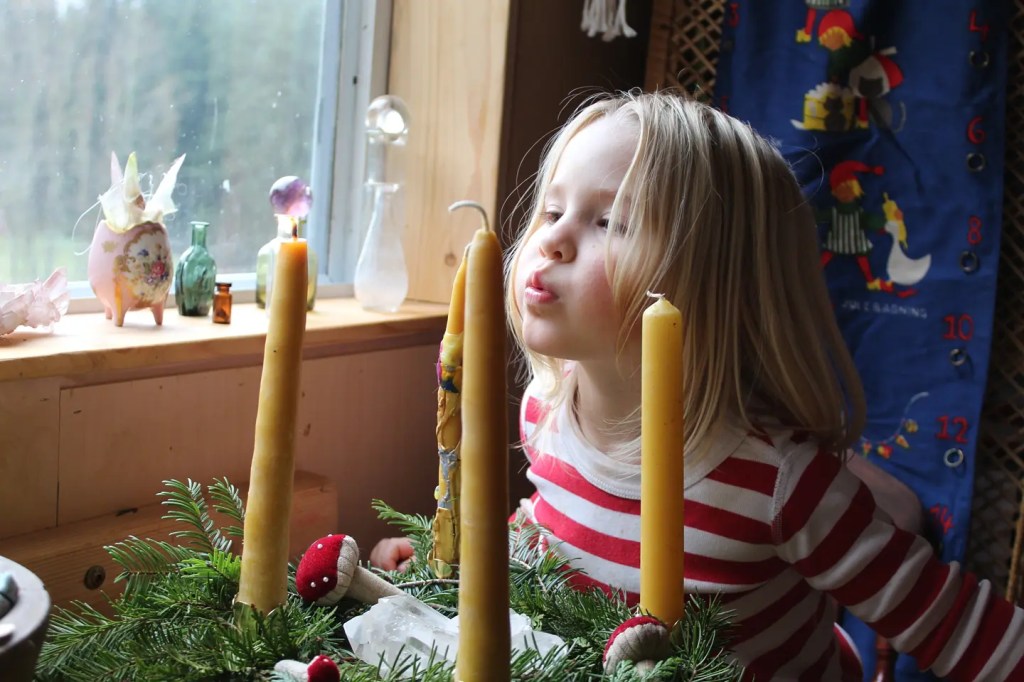
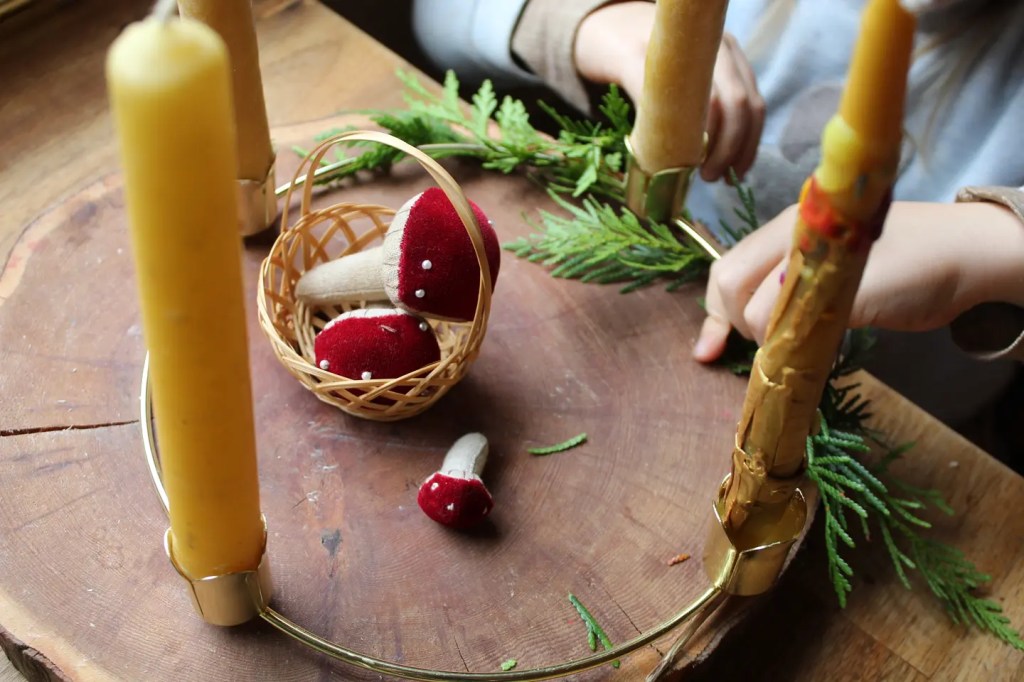
Week 1- Crystals, Minerals, Shells, Bones 1st Sunday Setting the Scene – Advent Garden, Kids wake up and find a few wonderful changes around the house, there is a little Advent garden table set with a creche and a floor of moss. Crystals shells and bones are in a small basket to be added by kiddies (each week they will find new treasures displayed in the basket, to add to the Advent garden until on Christmas, crystals, plants, animals and humans are represented) -Advent present banner is out, with first gift (Xmas PJs) -Advent Calendar, The homeschooling story table is set with deep blue silk. There is an Advent calendar as a backdrop, depicting a snowy day and starry sky. The story scene is set for the 1st advent story using felted puppets and nature objects. -Advent Wreath-There is a vase of red roses on the nature shelf. The shelf has been cleared except for the shells, crystals, and bones, to make room for the Advent wreath to come. -Go for a family walk and collect pine boughs. Bring them home and make an Advent wreath with 4 wax candles. In the evening, light the first candle and do Advent poems and songs (See poems and songs at the end of this post)
Mon- Homeschool Day Advent gift- Gold and silver block crayons Story- Advent Garden (See below) Craft- Make paint by crushing up mineral pigments and adding water.
Advent Garden Story -adapted from story by Cynthia Kennedy “Mother Mary was preparing for Christmas. It was time for her to weave a robe for the Child of Light who was soon to be born. Among the stars, she wandered, and they gave her radiant threads of crystal for the Child’s robe. To the Moon, she went, and it gave her silver threads. Threads of gleaming gold the Sun gave to her. And so Mother Mary gathered all the lovely threads and began to weave. But alas! The threads slipped apart and could not be woven together. On her way went Mother Mary, searching, searching. “Ah, dear stones and crystals,” said Mother Mary, “you are so strong and firm. Can you help me to weave these threads into a robe for my child of Light?” “No, Mother Mary. We will mark your pathway to the stable and give you sturdy ground for your footsteps, but we cannot help you weave your threads.” “Ah, dear plants,” said Mother Mary, “you are so lovely and green. Some of you are green even in the depth of winter. Can you help me to weave these threads into a robe for my child of Light?” “No, Mother Mary. We will make you a garden where the Christmas rose can bloom, but we cannot help you weave your threads.” “Ah, dear animals,” said Mother Mary, “you are so nimble and lively. Can you help me to weave these threads into a robe for my Child of Light?” “No, Mother Mary. Our brother Donkey will help you on your long journey, but we cannot help you weave your threads.” Now, Mother Mary no longer knew where to turn for help to weave her lovely threads. But lo! There came an angel to her and spoke softly, saying: “Mother Mary, you must ask the children for the love in their hearts. When the children of Earth send you their love, then you will be able to weave the Child’s robe.” And that is just what happened. And now, each year at Advent we light up the darkness with love and help Mother Mary to weave the robe for the coming Child of Light. Sing: “Over stars is Mary wandering, In her mantle’s flowing folds, Radiant threads of starlight woven, For her little child she holds, Throngs of stars behold her passing, All the sky is filled with light, With her hands she weaves and gathers, Blessings for the Christmas night” (Karl Schubert)
Tue- Homeschool Day Advent gift: Assorted crystals Story- Advent Garden Craft- Make calming magnesium bath salts with crystal wishes See bath salt recipe here: https://mommypotamus.com/bath-soak-recipe/
Fri- Sat- St. Nicolas Day Advent Gift- Gold bells, oranges, chocolate coins, silver stars Story-St. Nicholas and the Star Children, Wynstones Press (Winter) “Once St. Nicholas rode across the clouds from a country where the sun rises in the morning to a country where the sun says goodnight in the evening. Up in the heavens, he met Mother Mary who was carrying the Christ Child in her arms and Mother Mary said to St. Nicholas: “Once again it is time that I take the Child down to earth for a while so that he can play with the children.” When she had said this, many little stars came along from all sides of the heavens and asked whether they could go with them down to the earth. “Yes,” said Mother Mary, “but only if the moon will show you the way, for I cannot carry you all under my cloak.” When St. Nicholas heard this he rode off to the moon: “Good evening, dear Moon.” “Good evening, St. Nicholas.” “Dear Moon, will you please show these little stars the way to the earth.” “Yes, willingly, if the sun comes along too.” St. Nicholas rode to the sun. “Good morning, dear Sun.” “Good morning, St. Nicholas.” “Dear Sun, will you please help to take these little stars down to the earth?” “What do they want to do there?” “They want to play with the Child of Light and the children of the Earth.” “That is how it should be,” said the Sun. And now the sun placed himself on one side of Mother Mary and the Moon on her other side. The Moon took the little stars in her lap, and the Sun held the hand of the Child of Light who was sitting in his mother’s arms. Thus they went together down to the earth, but St. Nicholas rode on in front of them. He rode so fast across the clouds that he arrived on the Earth much earlier than the others. On Earth, he went from house to house and told everyone that the Child of Light would soon arrive, and he gave the children on the Earth presents so that they could play with the Child of Light. Then the Child of Light arrived on the Earth accompanied by Sun and Moon. He jumped out of Mother Mary’s arms and showed the little stars the path to the children on the Earth, but when the little stars leapt out of the lap of the Moon onto the Earth, they had all become human children and played with the Child of Light and the other children on the Earth. It was a happy game, for the children of the Earth play more beautifully and happily when the Child of Light plays with them. Mother Mary looked on and smiled. Many stars who had become children of the Earth stayed with the human children; and when Mother Mary took the Child of Light back into the heavens, many children of the Earth were allowed to go with her and the Child of Light, to live with the stars”
Activity- Shine our shoes using homemade shoe polish (older children could make beeswax shoe polish). -Make St. Nicholas gift baskets of salt dough ornaments (baked on Wednesday), cards, oranges, gold coins and deliver to neighbours. -Playfully ask children to hide while you fill their freshly polished shoes with treats. Then children take a turns being St. Nicholas while others hide.
Advent Wreath Lighting Songs and Poems: “Winter is dark, yet each tiny spark Brightens the way to Christmas Day. Shine little light, and show us the way To the bright light of Christmas Day” (Traditional Waldorf poem)
“Advent, Advent a candle burns Advent, Advent a candle burns First one, then two, then three, then four Then stands the light child at the door” (See Winter, Wynstones Press for music)
1. “People, look east. The time is near Of the crowning of the year. Make your house fair as you are able, Trim the hearth and set the table. People, look east and sing today: Love, the guest, is on the way. 2. Furrows, be glad. Though earth is bare, One more seed is planted there: Give up your strength the seed to nourish, That in course the flower may flourish. People, look east and sing today: Love, the rose, is on the way. 3. Birds, though you long have ceased to build, Guard the nest that must be filled. Even the hour when wings are frozen God for fledging time has chosen. People, look east and sing today: Love, the bird, is on the way. 4. Stars, keep the watch. When night is dim One more light the bowl shall brim, Shining beyond the frosty weather, Bright as sun and moon together. People, look east and sing today: Love, the star, is on the way” (By Eleanor Farjeon, Youtube has many videos with the tune)
Phoenix has been asking a lot about the day of the week and how many sleeps until Advent starts, so it seemed like a great time to create some tools for him to conceptualize the rhythm of the week and the passing of time.
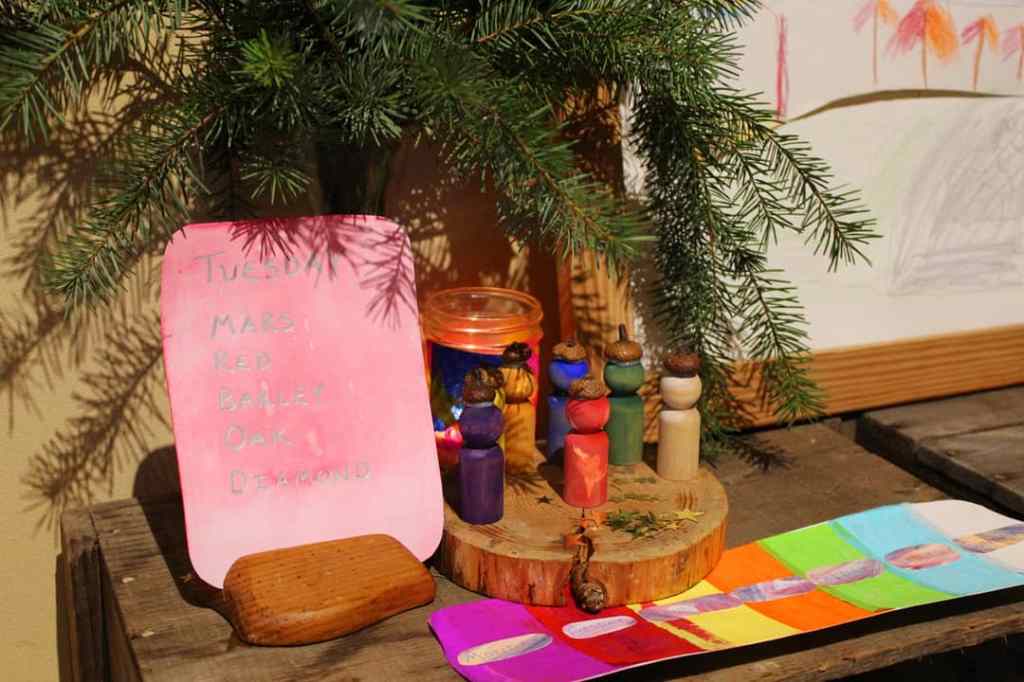
In Waldorf education the days of the week are each associated with a colour, planet, grain, tree, metal, and gem. For example: Friday is Green, Venus, Barley, Birch, Copper and Agate. These associations are based on ancient astrological knowledge and the insight of Rudolph Steiner. The connections deepen the rhythm of the passing days and can be used to plan meals and clothing colour choices.
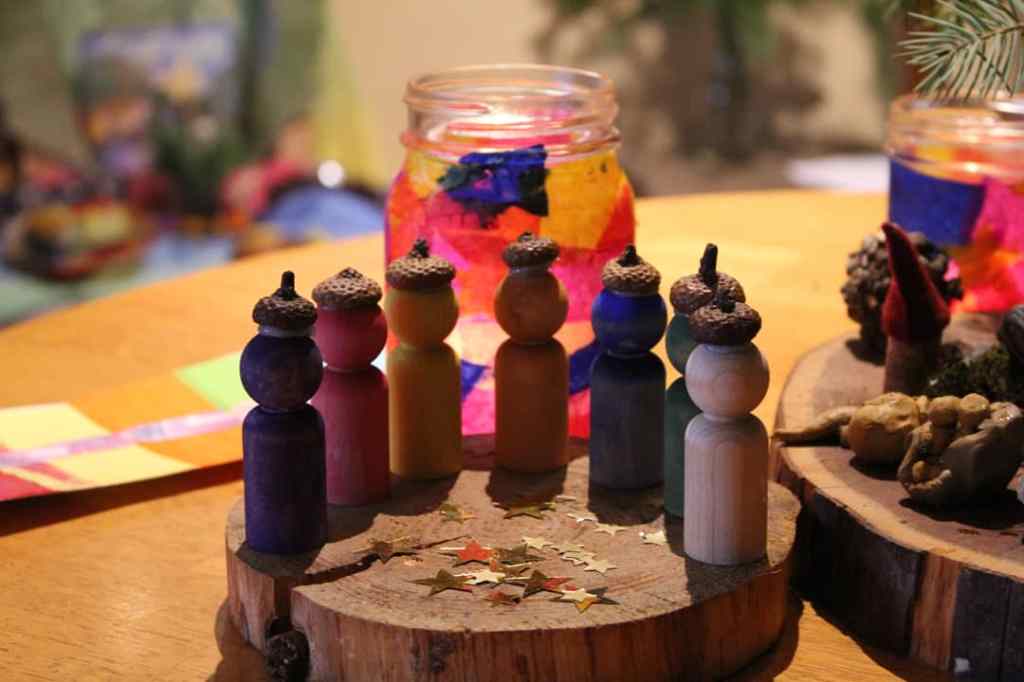
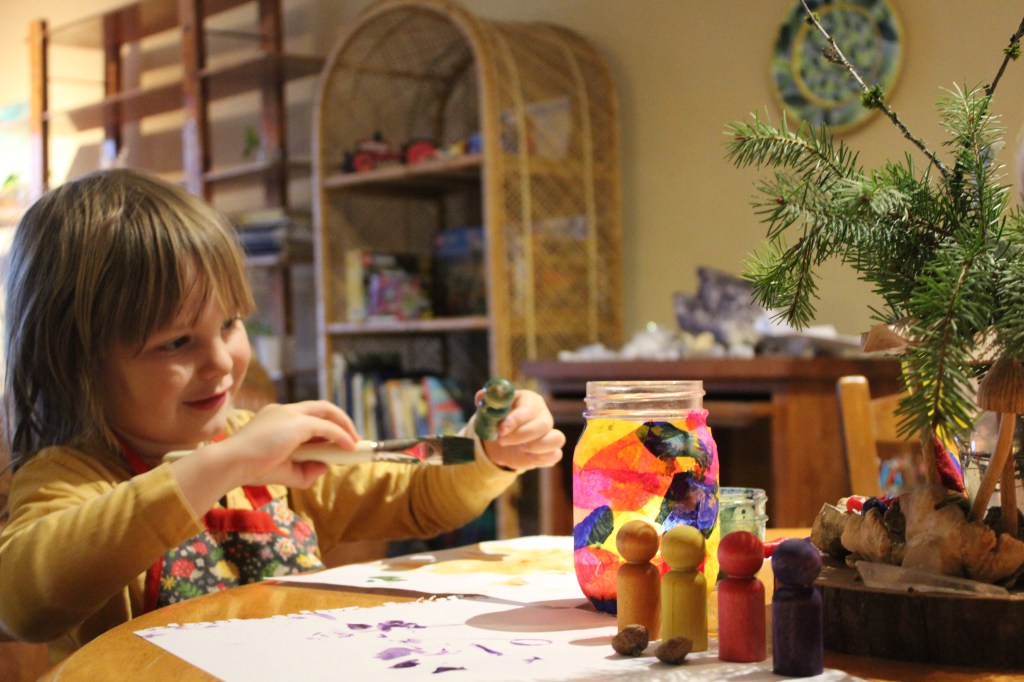
With Phoenix being 5 years old I thought it was nice to begin simply so we created a chart of the days of the week represented by their colour. Then I invited the kids to paint a family of 7 wooden peg dolls corresponding to the 7 days of the week. Phoenix placed them in order using his chart, on a round wood slice and excitedly chose the peg doll representing the current day of the week Friday, who then stands in the centre to visually represent the current day. We spoke about Venus (for Friday) adding a celestial connection to the weekday.
Since making the peg doll calender this morning, Phoenix has been confidently counting the sleeps until Advent for his sister when she asks 🤗🥰









 HeartSong