
Myrnong Kulin Jumbunna-November to December
“The Wurundjeri recognize November and December as the season of Yam Daisy Harvest and Men’s business season, which is the last of the eight seasons on the Wurundjeri calendar. It runs from late October to late December.
This is the period when the yam daisy, also known as the Australian parsnip, is at its tastiest and once could be harvested in great quantities. The introduction and over-grazing of sheep virtually eliminated myrnong within three years.
The warm dry weather at this time of the year was also conducive for men to travel and visit pilgrimage sites for male initiation.
The yam daisy harvest and men’s business season ends on the Summer solstice and thereby completes the calendar of eight Wurundjeri season. The arrival of the hot north wind Summer is heralded by the flowering of Coranderrk, which is otherwise known for the obvious reason as the Christmas Bush.”
– The Eight Wurundjeri Seasons, by Jim Poulter
I was first inspired to write this seasonal activity guide as a documentation of my family’s process towards belonging in Melbourne, after we arrived from Canada in 2018.
Through my motherhood journey I have learned that whatever you put energy into will grow and flourish. A new born baby and mother need skin to skin time to begin the process of attachment and milk production. That same logic can be applied to our connection to place, if you want to feel connected to the land you need to spend time fostering a personal sense of belonging in community and nature.
We can do that by simply being outside, in the city or wild places, noticing plants, creatures, and changing seasonal patterns. We can extend that to engage with the elements through learning basic survival skills like fire building and creating nature shelters. We can connect with our community through seasonal celebrations, shared songs, and stories. We can bring nature into the home through, foraging or growing food, nature crafting, making ferments, and healing plant oils.
When I arrived in Melbourne, I tried to make sense of the surroundings with my Northern Hemisphere way of seeing and it left me feeling disconnected. There was a day in January when I walked outside and was hit with scorching sun and a hot wind of 40 degrees. I thought to soldier on to the park with the kids, when an elderly lady warned me to take the kids home and stay cool as the baby could easily overheat in the stroller with UV mesh surrounding it. I panicked and headed home unsure of what to do when it is so hot outdoors. I came to realize that summer can mean finding indoor activities to hide from the heat, it can be a contracting time and not the soft warm expansion I was used to from Vancouver.
I wasn’t rooted in the seasonal rhythm and with the changeable and often extreme weather, I didn’t know how to relate to this land. My weather app was a bit of a help, but I needed to know how others lived and thrived here. So, I talked with folks about the weather and their expectations of the seasons, and I found I got very different answers depending on who I spoke with. I realized many folks are not spending time outside living in the elements or do not crave emersion in the seasons. I needed to find the experts. Then I met Jake and Emma at a wonderful local playgroup at Beaton Reserve and everything began to make sense. They taught me about the Wurundjeri people who are some of the first people of this region, who instead of 4 seasons lived within 8 and it was like a veil was lifted. These 8 seasons precisely describe the seasonal shifts here and they associated different important communal activities to each season. December isn’t early summer it’s Myrnong Kulin Jumbunna, Season of the Yam Daisy.
This way of seeing the seasons in retrospect seems so obvious, why was I trying to fit this land into my Northern Hemisphere expectations? I wouldn’t be the first to make the mistake and it highlights the importance of looking to indigenous knowledge.
Since I’ve gained that piece of the puzzle, I realized that belonging comes from honouring the uniqueness of place and finding a way to relate to it. These activities grew from our daily walks around the Yarraville neighbourhoods. We began to notice what plants were flowering and what fruit was ripe. We asked neighbours if we could harvest their unwanted fruits and flowers. We made connections and began to feel at home. These activities helped to root us here, to make sense of this seasonal rhythm and natural surroundings. Since then, I have expanded this project to include the children, I care for in my family daycare. The activities have evolved and taken on more meaning through the children’s engagement and through the wonderful community we found with Sacred Place Homeschool and Trugo Playgroup.
Purpose of Guide :
-A seasonal guide of activities, recipes and celebrations focused on connecting with nature and community through practicing traditional homemaking skills in connection with the 8 Wurundjeri Seasons.
– Many of the foods and natural materials used by the Wurundjeri are no longer available for foraging. Although using different plant materials, these activities are meant to reflect and honour the seasonal work of the Wurundjeri.
-The activities are built around using fruits, flowers and nature objects specific to the Melbourne area, that can be found and harvested from neighbours gardens, laneways and parks.
-The activities are designed to supplement a home rhytmn or alongside a Steiner inspired curriculum of songs and stories.
-These activities were chosen for the guide as they were the children’s favorites, they became like old friends that we could return to every season for comfort and nourishment.
-These activities have been chosen for their accessibility for children and simple enjoyment they offer. I did the activities with my daughter and son starting at 1.5 years old and 3 years old. Different age groups will engage with the materials and concepts in varying ways depending on their development and interests.
Calendula Sun Oil–
This golden healing oil can be used as a body oil for dry skin or can be added to a beeswax balm to create a salve for cuts and bruises.
Ingredients: Calendula flower heads, Olive oil

Method:
-Gather fresh Calendula flowers. The strongest medicine is in the green base of the Calendula flower, so be sure to select whole flower heads.
-Using a mortar and pestle or rock, gently mash the flowers to help bring the juices out.
-Loosly pack the flowers into a jar, leaving an inch of space at the top. Pour oil over the flowers until they are completly submerged under oil. Fill oil nearly to jar brim to reduce oxidation of the oil and molding.
-Place the sealed jar in a sunny window. Shake daily for 4 to 6 weeks.
Learn more about the uses and benefits of Calendula here: https://learningherbs.com/remedies-recipes/calendula-oil/
Painting with Flowers-
Method:
- Collect flowers
- Using fingers press, mash and spread flowers onto thick water colour paper to see what colours the petals make. To see other other wonderful activities like this one, check out my mentor Carol Litnaitsky here https://www.youtube.com/c/PlayLearnTeach/videos

Solstice Spiral-
Celebrate the Summer Solstice and longest day of the year, with a special evening tea in the garden or park with family and friends.
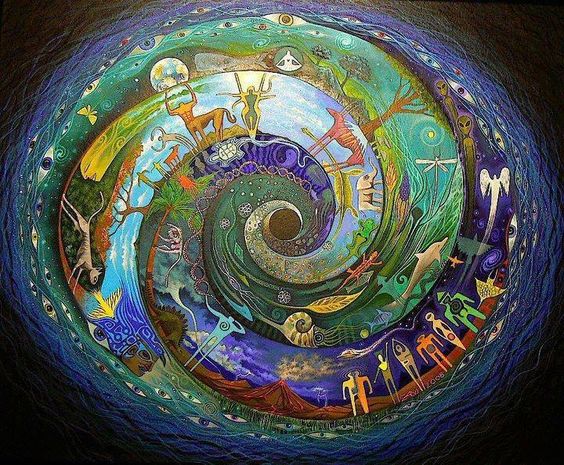
– Create a spiral with a path large enough to walk through, using locally foraged branches and floweres.
– A large candle in a jar is placed in the centre of the spiral. Each spiral participant is given a their own unlit candle inside a jar.
-Create a circle of friends and family around the outside of the spiral. While the group is singing, each person is invited to enter the spiral with their candle. They walk to the center of the spiral to light their candle and say a wish or prayer to themselves or aloud if they feel comfortable. Then they walk out finding a place for their candle to stay along the way.
Midsummer Night’s Flower Crowns or garlands:
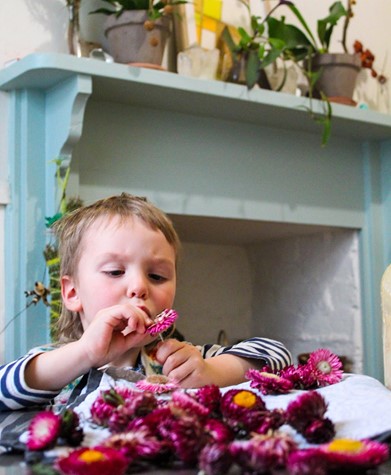
Method: Gather Everlasting Daisies (The organic veggie store in Seddon is a great source)
-Using a needle and fishing line sew the Everlasting Daisies through their center until you have a string the desired length.
-Tie around your head as a crown or hang in long garlands to decorate the house and garden for Solstice.
I hope you enjoyed this post 🙂 Next season’s guide for Winmallee Yallambie-Gunung (High Summer) is coming soon!! Subscribe to the HeartSong blog to receive the next guide to your inbox ❤

 HeartSong