Ideas and Inspirations for a Magical Advent, Week 3

The third light of Advent is the light of beasts, the light of hope, that we see in greatest and in least“-Rudolph Steiner
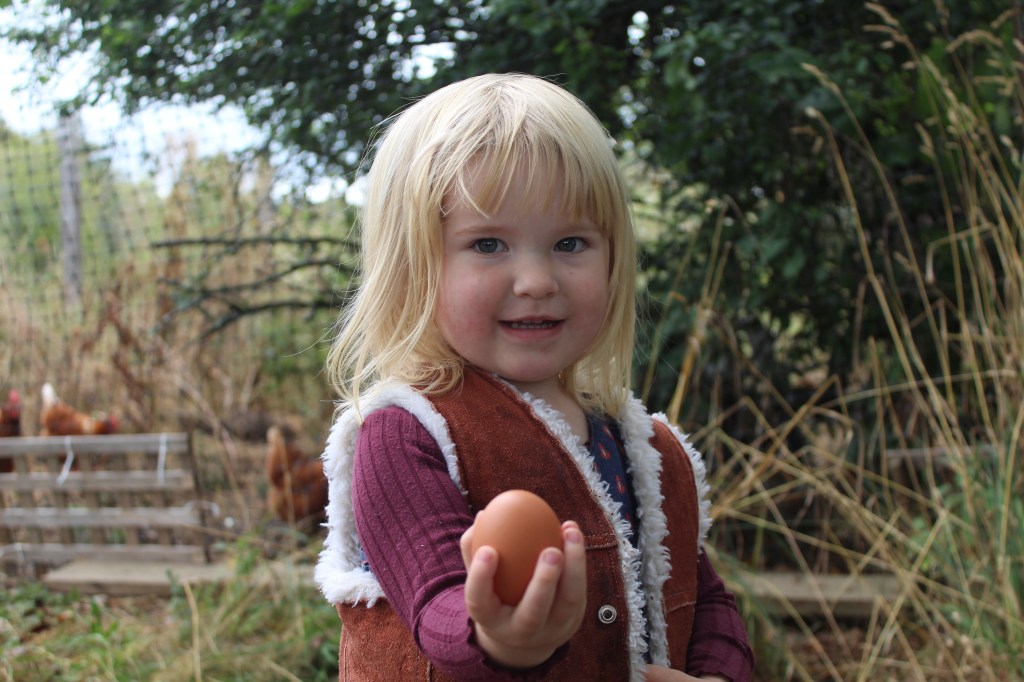
There is so much to look forward to this week! We’ll be celebrating the animal kingdom, weaving into our days special care of the animals on the farm. We’ll install the new birdfeeder, built by my partner and kids, and extend that focus on our animal friends with sweet animal stories and crafts.

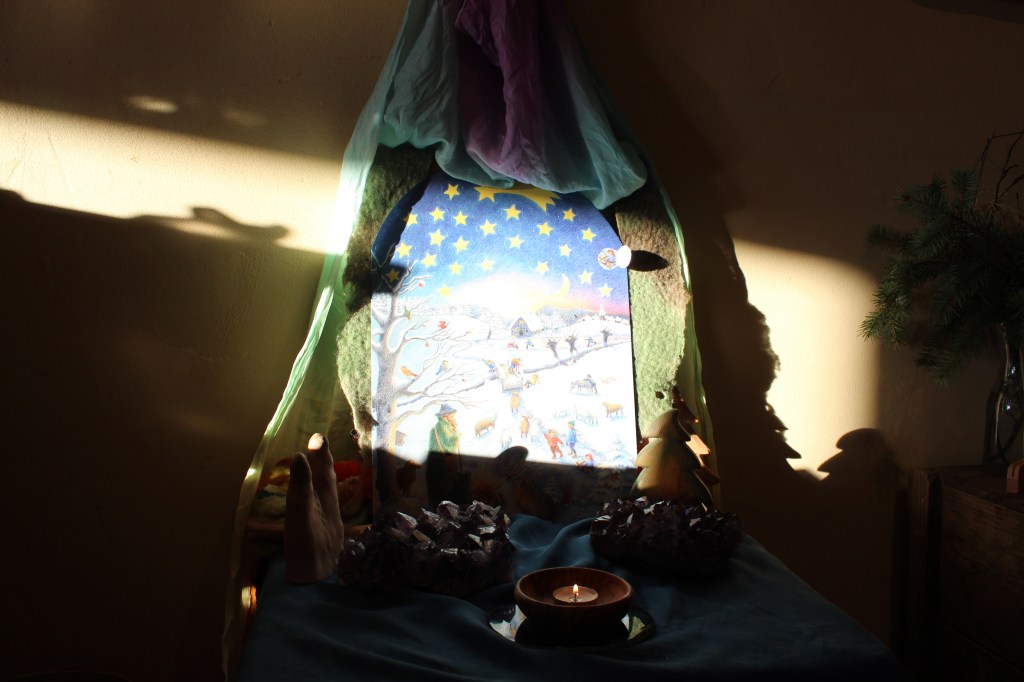
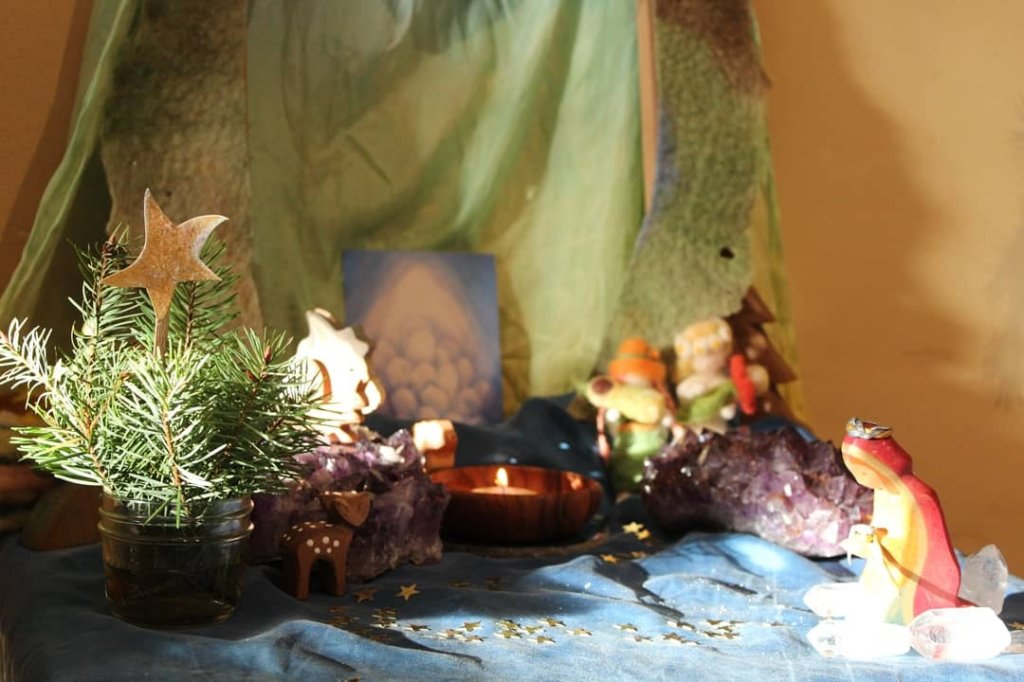
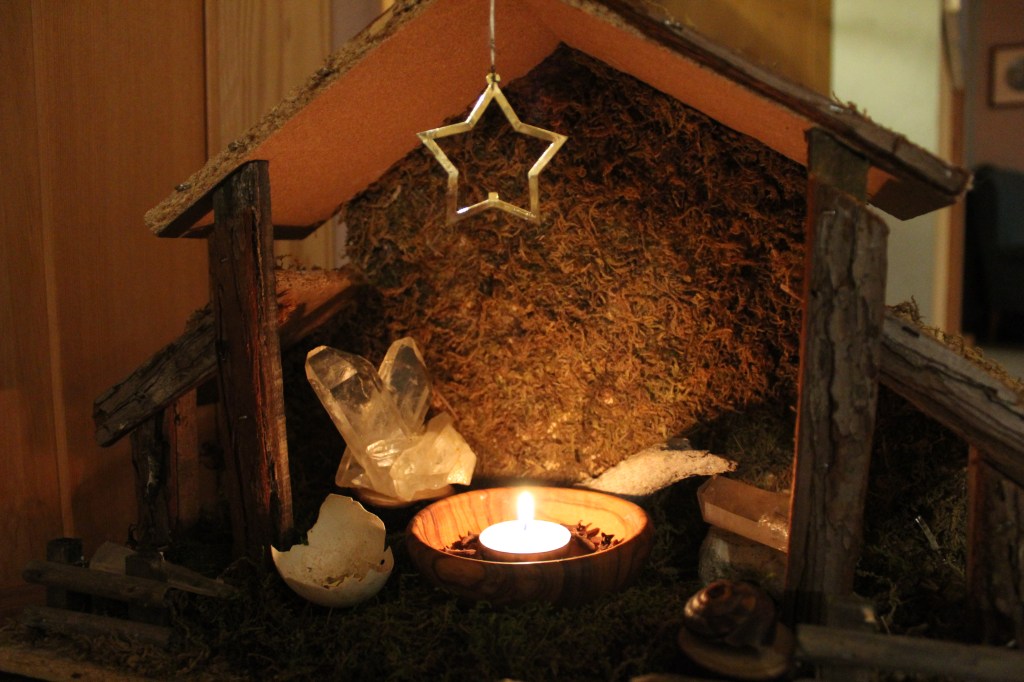
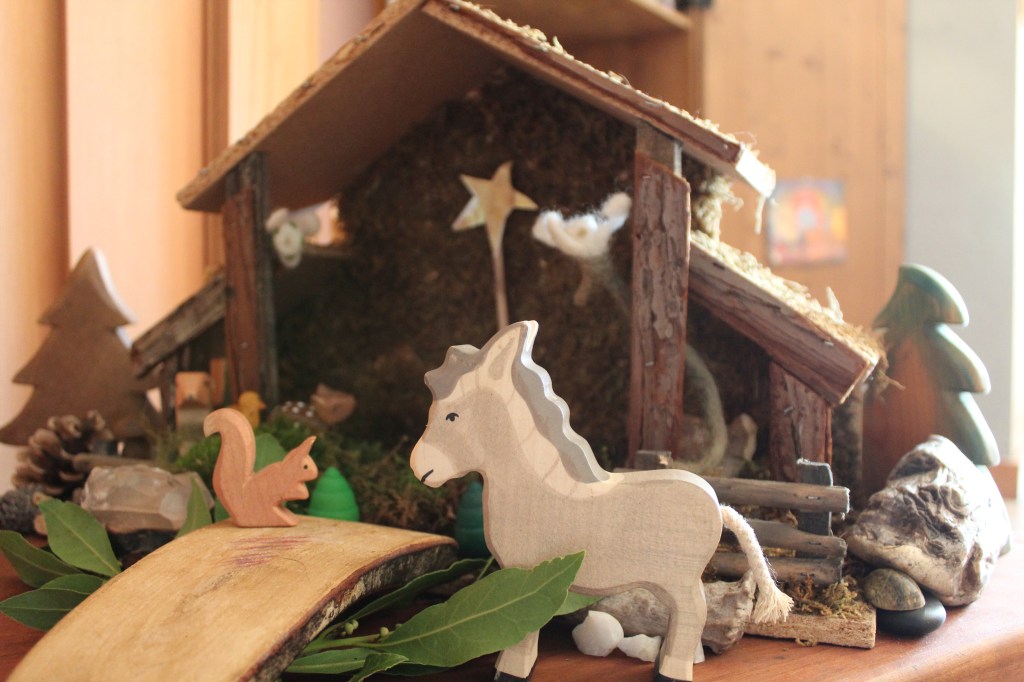
Building on last week, the Advent garden is now home to crystals, plants and animals. The children have been enjoying playing house with the Advent garden and it has taken on a life of its own through their imaginations .
Here is my plan for Week 3-Animals

Each day includes a daily advent gift. On homeschool days the gift ties in with a craft along with a story. Each week in our homeschooling rhythm I perform the story 3 times with felted puppets, on the last day I invite Phoenix to be the puppeteer and he loves telling the story, often with new insights and plot twists.  

Sunday-

Advent gift- Small wooden animals inside a walnut shell nest. Inspired by this page from “A Time To Keep”, By Tasha Tudor 😍

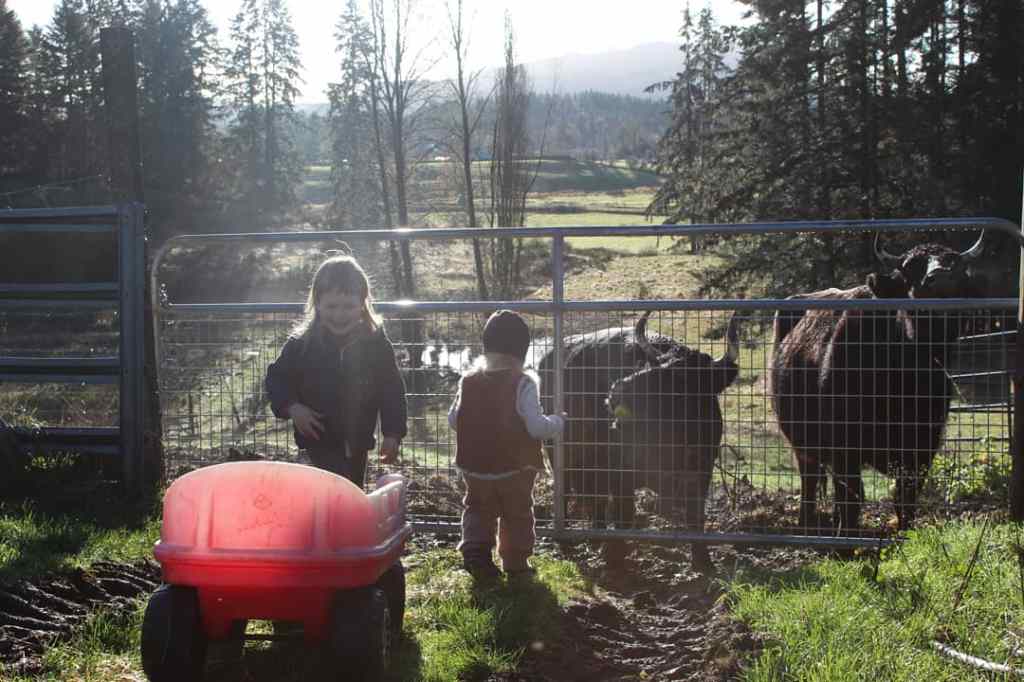
Activity-Go for a family walk and show special care to the farm animals. We are usually in charge of the chicken’s care, but this week we’ll be bringing treats to all the animals that live on the farm. We’ll fill the chicken house with extra hay, bring the cows some treats (they like singing too and 😁) and hang our new bird feeder for the local birds.
Monday-Homeschool

Advent gift- Wool mittens

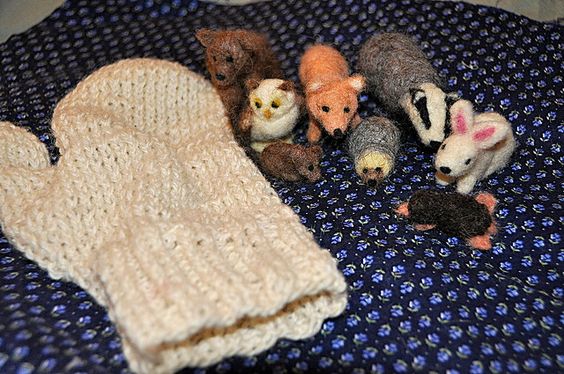
Story- The Mitten, By Jan Brett (See below) I’ll be telling this story using felted animals and an old mitten. I found this picture on Pintrest that inspired me to tell this story, but instead of creating all the animals from scratch, in my telling, I’ll include the felted animals that I have on hand.
Craft- Finger knitting with thick wool yarn. Finger knitting is a great fine motor skill practice for kids 5 and up.

Learn how to teach finger knitting here from a very inspiring earlychildhood educator at Sacred Place Homeschool https://www.youtube.com/watch?v=4uRYfGb6f24&t=21s

Story: The Mitten, by Jan Brett (as adapted by Lavender Blue Homeschool)

Once upon a time there was a boy named Nikki who lived with his grandmother. On cold winter days they would sit by the fire and warm their hands just so.  Outside the world was covered with snow, beautiful glittering snow all around on the ground, in the trees, and on the rooftops.  The whole world was white with snow.  And Nikki told his grandmother, “I would like some mittens as white as the snow.”  His grandmother laughed and told him that he was sure to lose a mitten if it were the same color as the snow!  But Nikki said “Please, Grandmother, please make me mittens as white as the shimmering snow!”

So his grandmother agreed, and she gathered her balls of white yarn and her needles and soon she had made him the mittens.  He whooped with joy when they were finished and he quickly dressed in his coat and hat, his warm boots and his soft and beautiful new white mittens and he ran outside to play.  It was a crisp clear day and the sun sparkled on the snow and Nikki ran and jumped and made snowballs to throw against the trees.  He walked along the top of the stone walls and jumped into the soft snow and then he ran up hills and rolled back down.  He started to climb a tree but it was too difficult with his mittens on so he tucked them into a pocket.  And what do you suppose?  One of those mittens fell down into the snow!  Nikki didn’t notice and he went right on running and playing and shouting all the wonderful afternoon.

Pretty soon a little mole came tunneling up through the ground near the mitten.  She was curious so she burrowed inside the mitten and found it to be cozy and warm.  Then a squirrel scampered by and thought that the mitten looked like a nice place to nest so he cozied inside as well.  Next a badger trundled along and decided that she could use a rest in that warm mitten.  A fox trotted up to the mitten and sniffed it.  He decided it must be warm inside so he stuffed himself in, and by now the mitten was becoming quite stretched out!  Now a bear lumbered by and though she was big and the mitten was crowded, she did not want to be the only one left out in the cold.  So she turned her tail and scootched herself into that mitten!  A mouse scurried by and squeaked in surprise to see a white mitten all stretched out with a mole, a squirrel, a badger, a fox and a bear all snuggled together inside!  She wanted to try it too so she jumped up on the bear’s nose.  Those little mouse paws made the bear  Ahh….Ahhhh…AAACCHHHooooo!!!!  The bear sneezed!  And all the animals went tumbling out into the soft snow, and the mitten went flying up into the air!

Nikki had finished playing and was looking everywhere for his mitten when much to his surprise he saw it flying through the air!  Nikki caught his mitten with a “Whoop!” and ran back inside to warm up by the fire.  He showed his mittens to his grandmother.  “See, Grandma, I have both my mittens!”  And grandmother laughed and laughed, for one mitten was the size of Nikki’s hand, but the other mitten was the size of Nikki!

Tuesday-Homeschool

Advent gift-Mini felted bee in a walnut shell

Story-The Mitten, by Jan Brett

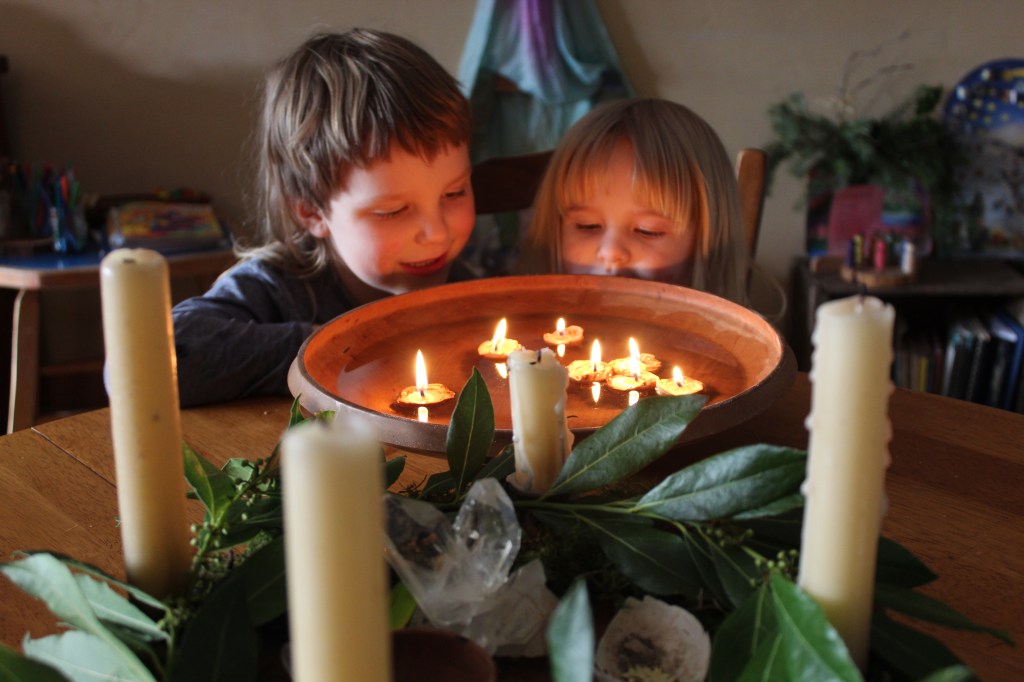
Craft- Make floating beeswax candles inside walnut shells

Learn how to make this craft here: https://woodlarkblog.com/diy-floating-walnut-candles/
Wednesday-Homeschool

Advent gift- Small jars of honey and a wooden honey spoon

Story-The Mitten, by Jan Brett

Craft-Make milk and honey soap

Here is an easy soap recipe that doesnt use lye: https://www.happinessishomemade.net/10-minute-diy-milk-honey-soap/ If you’re feeling more adventurous check out this recipe here: https://practicalselfreliance.com/goats-milk-honey-soap-recipe-beginners/

Thursday-

Advent gift-Book-Emily and Daisy-Elsa Beskow
Friday-

Advent gift-Animal stickers and little animal shaped notebook.

Saturday-

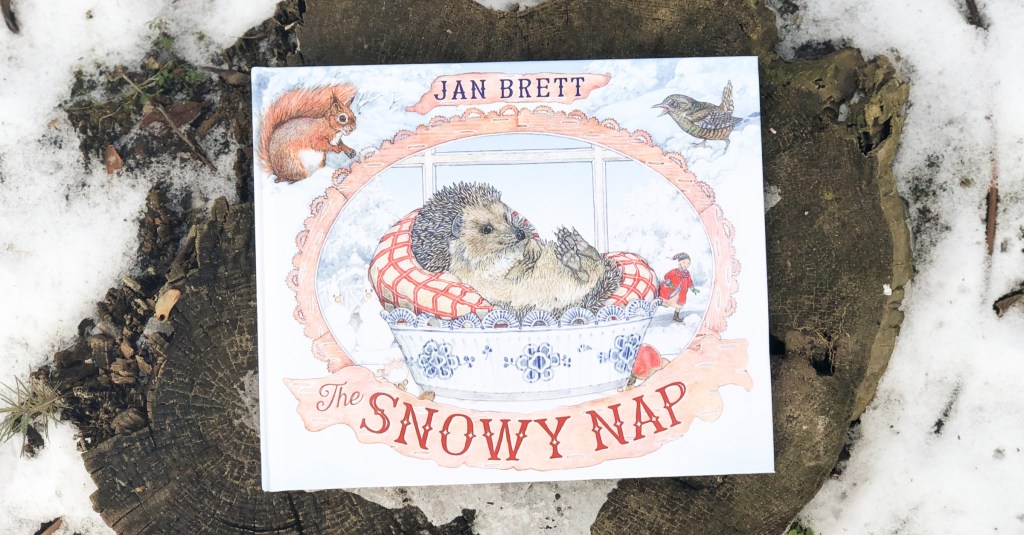
Advent gift-Book-A Snowy Nap, By Jan Brett
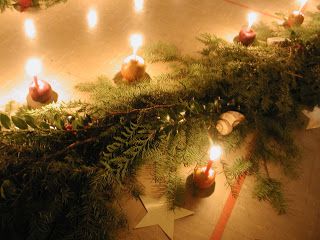
Activity-Today I’ll be gathering boughs and preparing a spiral in a sheltered outdoor spot, in preparation for tomorrows Solstice Spiral. This is a lovely way to deepen the experience of bringing light to the darkness with friends and family. This also works in a Southern Hemisphere setting for the Summer Solstice as a way to celebrate the gifts of the summer on a long balmy evening. See my 8 Wurundjeri Seasons blog post for details of Summer Solstice Spiral.

Method:

–  Create a spiral with a path large enough to walk through, using evergreen branches.

-A large candle in a jar is placed in the centre of the spiral. Each spiral participant is given a candle secured in a red apple as the candle holder.

– Create a circle of friends and family around the outside of the spiral. While the group is singing carols, each person is invited to enter the spiral with their candle. They walk to the center of the spiral to light their candle and say a wish or prayer to themselves or aloud if they feel comfortable. Then they walk out finding a place for their candle to stay along the way.
Thanks for reading lovelies! I’ll be sharing photos of our Solstice Spiral in next week’s post  ❤

.

The 8 Wurundjeri Seasons of Melbourne-Myrnong Kulin Jumbunna, Season of the Yam Daisy

Myrnong Kulin Jumbunna-November to December

“The Wurundjeri recognize November and December as the season of Yam Daisy Harvest and Men’s business season, which is the last of the eight seasons on the Wurundjeri calendar. It runs from late October to late December.

This is the period when the yam daisy, also known as the Australian parsnip, is at its tastiest and once could be harvested in great quantities. The introduction and over-grazing of sheep virtually eliminated myrnong within three years.

The warm dry weather at this time of the year was also conducive for men to travel and visit pilgrimage sites for male initiation.

The yam daisy harvest and men’s business season ends on the Summer solstice and thereby completes the calendar of eight Wurundjeri season. The arrival of the hot north wind Summer is heralded by the flowering of Coranderrk, which is otherwise known for the obvious reason as the Christmas Bush.”

The Eight Wurundjeri Seasons, by Jim Poulter

I was first inspired to write this seasonal activity guide as a documentation of my family’s process towards belonging in Melbourne, after we arrived from Canada in 2018.

Through my motherhood journey I have learned that whatever you put energy into will grow and flourish. A new born baby and mother need skin to skin time to begin the process of attachment and milk production. That same logic can be applied to our connection to place, if you want to feel connected to the land you need to spend time fostering a personal sense of belonging in community and nature.

We can do that by simply being outside, in the city or wild places, noticing plants, creatures, and changing seasonal patterns.  We can extend that to engage with the elements through learning basic survival skills like fire building and creating nature shelters. We can connect with our community through seasonal celebrations, shared songs, and stories. We can bring nature into the home through, foraging or growing food, nature crafting, making ferments, and healing plant oils.

When I arrived in Melbourne, I tried to make sense of the surroundings with my Northern Hemisphere way of seeing and it left me feeling disconnected. There was a day in January when I walked outside and was hit with scorching sun and a hot wind of 40 degrees. I thought to soldier on to the park with the kids, when an elderly lady warned me to take the kids home and stay cool as the baby could easily overheat in the stroller with UV mesh surrounding it. I panicked and headed home unsure of what to do when it is so hot outdoors. I came to realize that summer can mean finding indoor activities to hide from the heat, it can be a contracting time and not the soft warm expansion I was used to from Vancouver.

I wasn’t rooted in the seasonal rhythm and with the changeable and often extreme weather, I didn’t know how to relate to this land. My weather app was a bit of a help, but I needed to know how others lived and thrived here. So, I talked with folks about the weather and their expectations of the seasons, and I found I got very different answers depending on who I spoke with. I realized many folks are not spending time outside living in the elements or do not crave emersion in the seasons. I needed to find the experts. Then I met Jake and Emma at a wonderful local playgroup at Beaton Reserve and everything began to make sense. They taught me about the Wurundjeri people who are some of the first people of this region, who instead of 4 seasons lived within 8 and it was like a veil was lifted. These 8 seasons precisely describe the seasonal shifts here and they associated different important communal activities to each season. December isn’t early summer it’s Myrnong Kulin Jumbunna, Season of the Yam Daisy.

This way of seeing the seasons in retrospect seems so obvious, why was I trying to fit this land into my Northern Hemisphere expectations?  I wouldn’t be the first to make the mistake and it highlights the importance of looking to indigenous knowledge.

Since I’ve gained that piece of the puzzle, I realized that belonging comes from honouring the uniqueness of place and finding a way to relate to it. These activities grew from our daily walks around the Yarraville neighbourhoods. We began to notice what plants were flowering and what fruit was ripe. We asked neighbours if we could harvest their unwanted fruits and flowers. We made connections and began to feel at home. These activities helped to root us here, to make sense of this seasonal rhythm and natural surroundings. Since then, I have expanded this project to include the children, I care for in my family daycare. The activities have evolved and taken on more meaning through the children’s engagement and through the wonderful community we found with Sacred Place Homeschool and Trugo Playgroup.

Purpose of Guide :

-A seasonal guide of activities, recipes and celebrations focused on connecting with nature and community through practicing traditional homemaking skills in connection with the 8 Wurundjeri Seasons.

– Many of the foods and natural materials used by the Wurundjeri are no longer available for foraging. Although using different plant materials, these activities are meant to reflect and honour the seasonal work of the Wurundjeri.

-The activities are built around using fruits, flowers and nature objects specific to the Melbourne area, that can be found and harvested from neighbours gardens, laneways and parks.

-The activities are designed to supplement a home rhytmn or alongside a Steiner inspired curriculum of songs and stories.

-These activities were chosen for the guide as they were the children’s favorites, they became like old friends that we could return to every season for comfort and nourishment.

-These activities have been chosen for their accessibility for children and simple enjoyment they offer. I did the activities with my daughter and son starting at 1.5 years old and 3 years old. Different age groups will engage with the materials and concepts in varying ways depending on their development and interests.


Calendula Sun Oil

This golden healing oil can be used as a body oil for dry skin or can be added to a beeswax balm to create a salve for cuts and bruises.

Ingredients: Calendula flower heads, Olive oil

Method:

-Gather fresh Calendula flowers. The strongest medicine is in the green base of the Calendula flower, so be sure to select whole flower heads.

-Using a mortar and pestle or rock, gently mash the flowers to help bring the juices out.

-Loosly pack the flowers into a jar, leaving an inch of space at the top. Pour oil over the flowers until they are completly submerged under oil. Fill oil nearly to jar brim to reduce oxidation of the oil and molding.

-Place the sealed jar in a sunny window. Shake daily for 4 to 6 weeks.

Learn more about the uses and benefits of Calendula here: https://learningherbs.com/remedies-recipes/calendula-oil/

Painting with Flowers-

Method:

  1. Collect flowers
  2. Using fingers press, mash and spread flowers onto thick water colour paper to see what colours the petals make. To see other other wonderful activities like this one, check out my mentor Carol Litnaitsky here https://www.youtube.com/c/PlayLearnTeach/videos

Solstice Spiral-

Celebrate the Summer Solstice and longest day of the year, with a special evening tea in the garden or park with family and friends.

– Create a spiral with a path large enough to walk through, using locally foraged branches and floweres.

– A large candle in a jar is placed in the centre of the spiral. Each spiral participant is given a their own unlit candle inside a jar.

-Create a circle of friends and family around the outside of the spiral. While the group is singing, each person is invited to enter the spiral with their candle. They walk to the center of the spiral to light their candle and say a wish or prayer to themselves or aloud if they feel comfortable. Then they walk out finding a place for their candle to stay along the way.

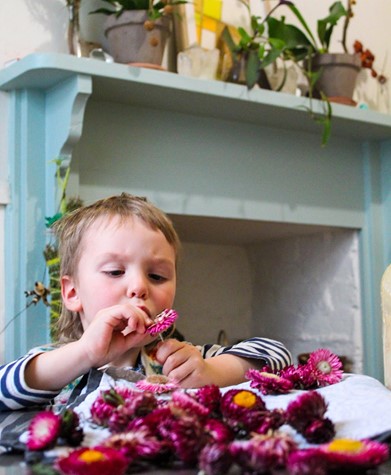
Midsummer Night’s Flower Crowns or garlands:

Method: Gather Everlasting Daisies (The organic veggie store in Seddon is a great source)

-Using a needle and fishing line sew the Everlasting Daisies through their center until you have a string the desired length.

-Tie around your head as a crown or hang in long garlands to decorate the house and garden for Solstice.


I hope you enjoyed this post 🙂 Next season’s guide for Winmallee Yallambie-Gunung (High Summer) is coming soon!! Subscribe to the HeartSong blog to receive the next guide to your inbox ❤

Ideas and Inspirations for a Magical Advent, Week 2

“The Second Light of Advent is the Light of the Plants, Plants that reach up to the sun and in the breezes dance” -Rudolph Steiner

Happy Second Week of Advent friends!! I hope you enjoyed some slow, cozy times with your family ❤

Our first week was lovely. The mist has temporarily lifted here and we’ve had some sunny days. At storytime each morning, the sun was just right, as to beam through the window to highlight the story table adding an amazing glow to the moment.

The children were excited about the Advent crafting, and in true Phoenix style, he had a few ideas, which added to and changed the crafts I had planned. As always the co- created activities became the most memorable, highlighting the importance of remaining open to change and working to support an emergent curriculum.

Building on last week’s structure, each day this week includes a daily advent gift. On homeschool days the gift ties in with a craft along with a story.

Advent Week 2- Plants

Sunday-

Advent gift-Mini wooden Christmas trees displayed in a giant walnut shell https://www.etsy.com/ca/listing/246244064/order-1-to-6-piece-of-2-34-inch-3?ref=pla_similar_listing_top-

Activity- Go for a family walk to collect chosen Christmas tree. Decorate Christmas tree!

-Add a few plant based nature treasures to join the crystals in the Advent garden.

Mon-Homeschool

Advent Gift-Paper white bulbs

Story- The Tree that Dreamt a Flower (See story below) This story is one of my favourites from childhood and I’ve been looking forward to sharing it with my kids. It might be a bit long for under 5 year olds, but could be told using felted puppets in a simplified version or read to older children. For children and adults alike this story holds powerful meaning which expresses the spirit of the season without focusing on the religious aspect.

Craft- Make planters for the bulbs with vases and crystal pebbles, add water and place bulbs in a sunny window to be ready to bloom for Christmas.

The Tree That Dreamt A Flower, adapted from the story by Isabell Wyatt

“There was once an archer, who lived amongst the stars, and his arrows brought not wounds but love for all things. One day he loosed an arrow which fell to earth on a cold and naked mountain side, where no plant had ever grown.  The arrows feathers turned into roots, and the arrow grew into a tree. This tree was the first fir tree.

The tree grew up pointing to the stars, and as the tree looked up at the stars, she loved them. So, every day she grew taller, for always she longed to reach them. Now the stones of that desolate place had rejoiced when the green fir tree came to live amongst them; but when they saw her yearning always towards the stars, they figured she would grow right away from them. So, the stones cried out to her: “Do not forget us all together, dear fir tree. It is right that you should love the stars, but love earth a little too.” The fir tree listened and looked down and was sorry for the stones imprisoned in the ground, and she sent her roots down deeper to embrace them. She began to love the stones and the soil a little, as well as the sky and the stars.

Then the small creatures who lived on that cold and bare mountain side, who longed for shade and shelter, cried out also to the firtree: “Dear fir tree, do not forget us either. We are glad that your head should be lifted towards the stars; but will you not lower your arms a little towards the earth, to bring us shade and shelter?” And the fir tree listened and looked down and was sorry for the small creatures of the mountain side. She let her branches droop until the lowest brushed the ground with their outstretched fingers and the small creatures of the mountain side crept beneath the fir tree thankfully, and found shelter there from the storms, and warmth when the night was cold.

 Now with her sturdy trunk, her drooping branches, and her sharp tip pointing to the stars, the fir tree begin to show in her shape that she was an arrow which had turned into a tree. She grew to love earth more and more, and to take more and more soil into her sap, until presently she was wrapped in bark, and her wood grew to have less and less the softness of a plant, and more and more the hardness of a stone. And now, where she had dropped her leaves to the ground, the soil became gradually richer, so that mosses, and small creeping plants, and presently taller plants, also began to cover the mountainside.

  Water plants begin to grow in the little mountain pools, which the rain left between the rocks. Amongst these, was a lily plant which looked up in love and wonder at the fir tree and listened with delight and longing when the fir tree spoke of the stars, to the stones and small creatures nestling beneath her bows. To them it was all like a wonderful fairy story, for the stones were imprisoned in the ground could not see the sky, and the little animals going on all fours could not lift their heads high enough to gaze upward at the stars. The moss, and the stones, and the small creatures and the lily plant said: “Oh if only a star would come down and live amongst us!”

 Now the fir tree often pondered how this might be brought to pass, for she too longed for the stones and mosses and the small creatures of the mountain side to be able to share her own joy in  the stars. One night she had a dream, in this dream she spoke aloud a magic spell, which called strongly upon a star to come to earth, and a star came curving like a falling spark out of the sky and entered her sap. Presently, out through the bark of one of her branches the star broke, and folded in a bud; and the bud opened into an exquisite delicately tinted flower with tender petals. That flower was the most beautiful thing which had yet been born upon the earth. For all this happened long long ago, when the earth was still very young, and there had never yet been any flowers at all; so that the Fir tree ‘s dream was the first dream of the first flower.

 The lily plant looked up in love and wonder at the fir tree and saw the wonderful pictures of the fir tree’s dream painted on the air around her. Now when the fir tree woke, she remembered her dream; and she remembered the magic spell she had spoken aloud in her dream. She said to herself: “Is this then the way to bring down a star to gladden the earth? Can I make my dream come true?” So now she spoke aloud again the magic spell of her dream, calling strongly upon a star to come to earth.

The lily plant looking up to her in love and wonder, heard her speak aloud the magic spell. Then, just as in her dream, a star came curving like a falling star out of the sky, and enter the fir tree’s sap. Presently, again as in her dream, out through the bark of one of her branches broke the star, and folded into a bud.  But what happened next was different from the dream. For the strength and stiffness of the fir trees wood entered into the bud, so that this became woody too. It sat on her branch like a stone, the colour of a stone; and when it opened it had not the tender delicately tinted petals of the exquisite flower of her dream, but thick, hard scales. It was not a real flower; it was a fir cone. The fir tree cried in distress: “I can never make my beautiful dream come true! There is too much soil in my sap.”

She was so sorrowful at her failure that she began to weep. But through her weeping she heard a sweet voice, speaking words of comfort to her from below. When she looked down, she saw that it was a lily plant which grew in the mountain pool the rain has made between the rocks. The lily plant said: “Do not weep dear fir tree, for you have done a new and wonderful thing. You have taught the stars the way to become flowers; and with your leave I and other tender plants can still make your dream come true.” And the fruit tree dried her tears and answered: “With all my heart.”

 So, the lily plant spoke aloud the magic spell which she had learned from the fir tree, calling strongly upon a star to come to earth. A star came curving like a falling spark out of the sky and entered the lily plants sap. Now there was no soil in the lily plants sap, for she lived with her feet in the water, and every part of her was soft and delicate and tender. So now a stem rose from between her leaves, lifting the star aloft, enfolding in a soft bud.  The soft bud opened into a delicately tinted flower with tender petals, as beautiful as the flower in the fir trees dream. This was the first real flower; and the first real flower was a lily. Because the star which had entered the lily plants sap was a six pointed one, the lily had six petals.

 Just as a lily plant, in love and wonder, had learned from the fir tree, so other tender plants learned from the lily plant how to call stars down from the sky and turn them into flowers. The fir tree rejoiced to see her dream come true, and the flower of the lily plant told her: “I heard a prophecy among the stars, dear fir tree, while I was still a star myself,  before I came to earth. And this was it: because you were the first plant to long to bring a star to earth and give birth to a flower, and because you long to give this beautiful gift to the stones and the small creatures, the time will come when once every year you will be covered from tip to toe with stars and flowers and gifts. And just as the small mountain creatures love you now, so little children everywhere will love you. “

And that is how the archers arrow became the Christmas tree.

Tue-Homeschool

Advent Gift- Handmade pine cone ornament

Story- The Tree Who Dreamt a Flower, By Isabel Wyatt

Craft- Make pine cone ornaments or pine cone bird feeder.

Link to craft method here: https://www.apieceofrainbow.com/pine-cone-crafts-decor/

Wed-Homeschool

Advent Gift- Small wooden acorn pendant on a golden twine, displayed in a a giant nutshell.

https://www.etsy.com/ca/listing/177489104/wooden-acorns-magenta-acorn-color?ref=search_recently_viewed-3

Story- The Tree That Dreamt A Flower, Isabell Wyatt

Craft- Make felted acorns with real acorn cap. Link to method here: https://youtu.be/NvGGamOWtbc

Thur-

Advent Gift- Book, The Sun Egg by Elsa Beskow

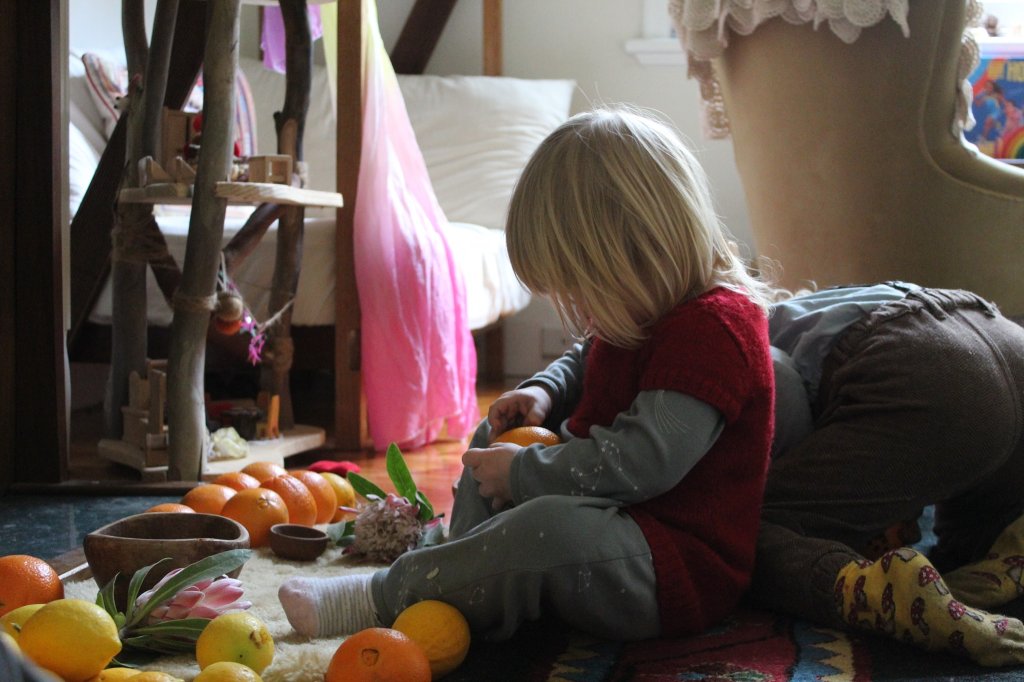
Bonus activity:  Make an invitation to play with oranges placed in a bowl, cinnamon, cloves and nutmeg in little wooden bowls and a mortar and pestle for grinding. Kids could experiment with scents and create preserved oranges by sticking the cloves into the oranges.

Fri-

Advent Gift-Houseplant for child’s room

Sat-

Advent Gift- A variety of sprounting seeds such as Chickpea, Mung Bean, and Lentil to be grown into nutritious sprouts for eating through the winter. https://www.westcoastseeds.com